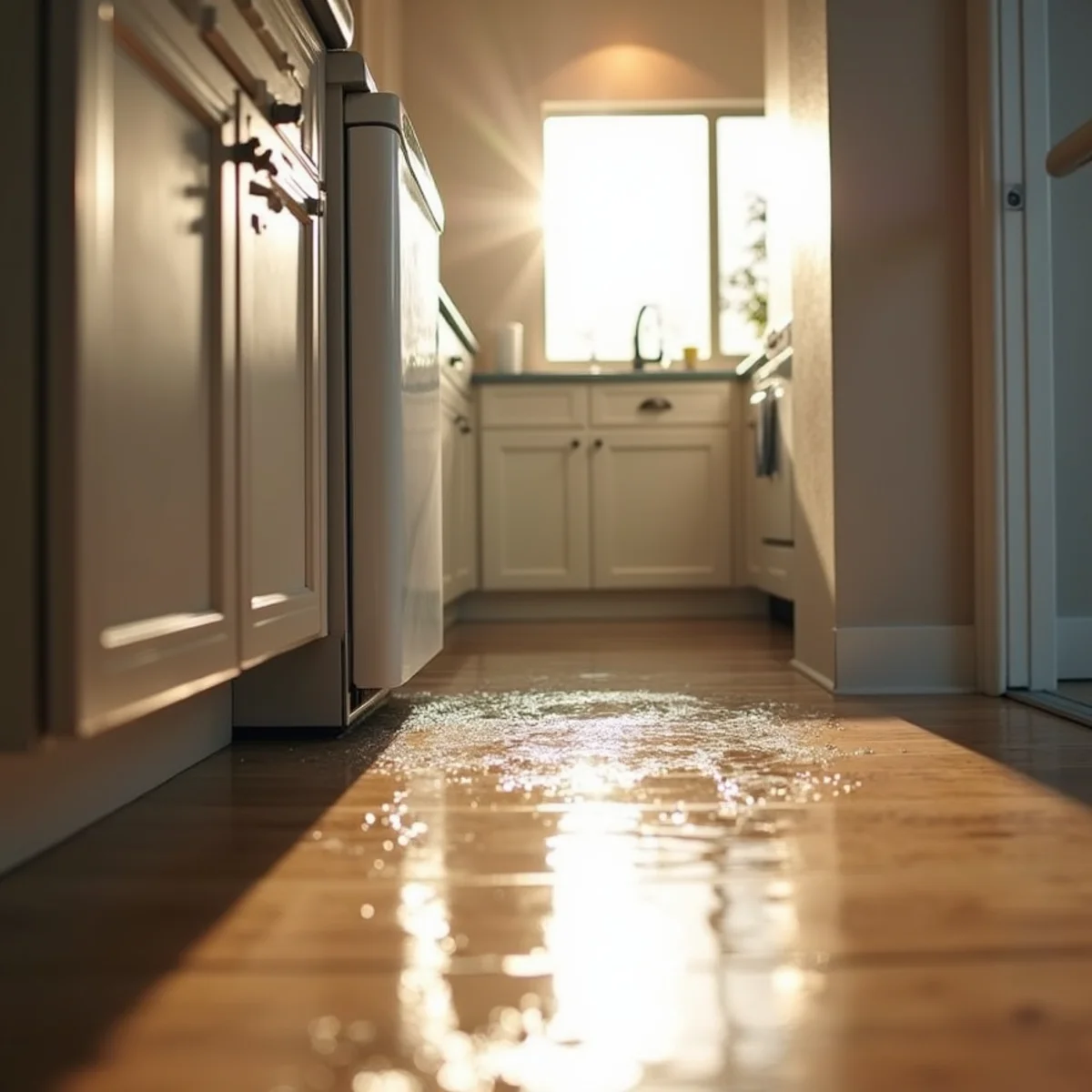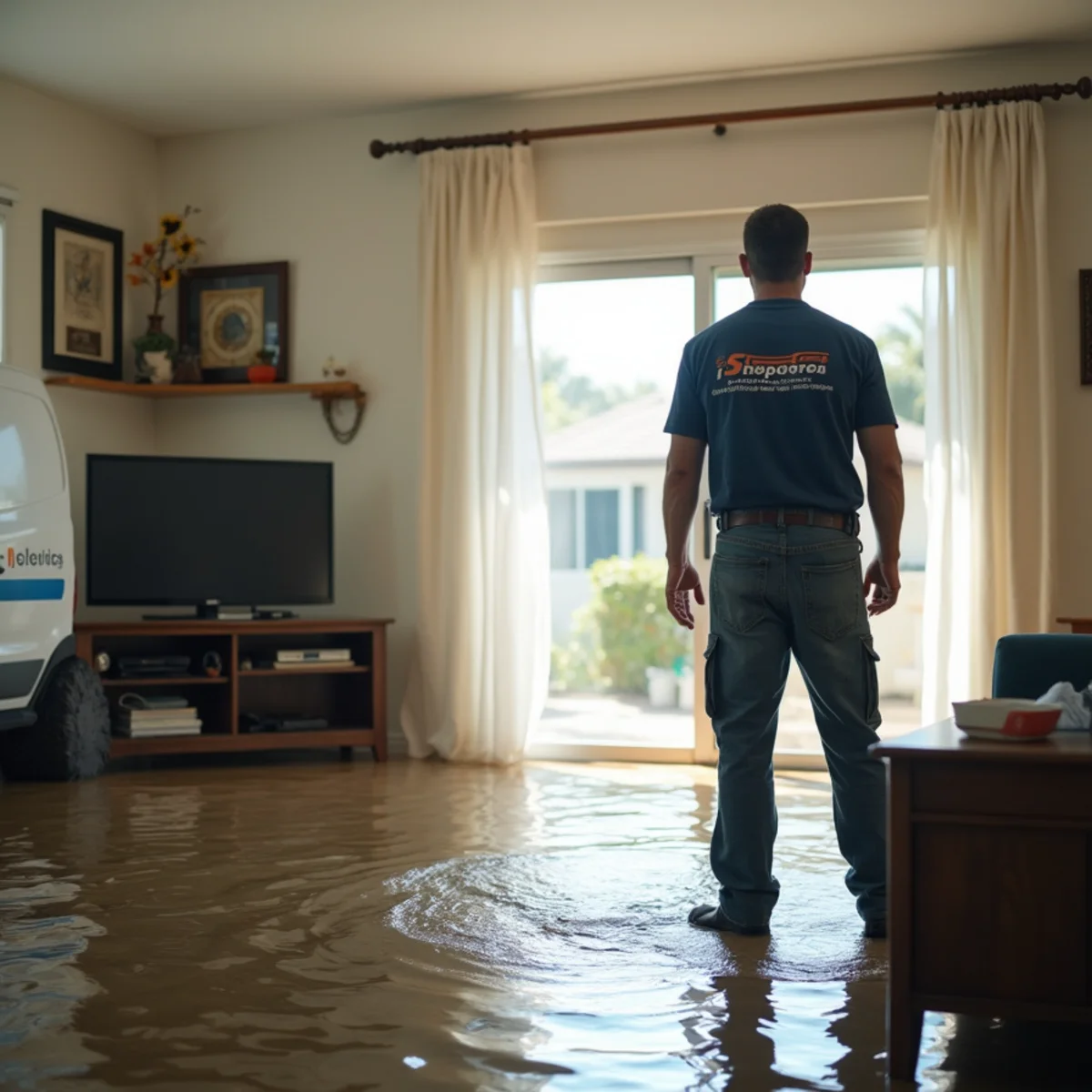
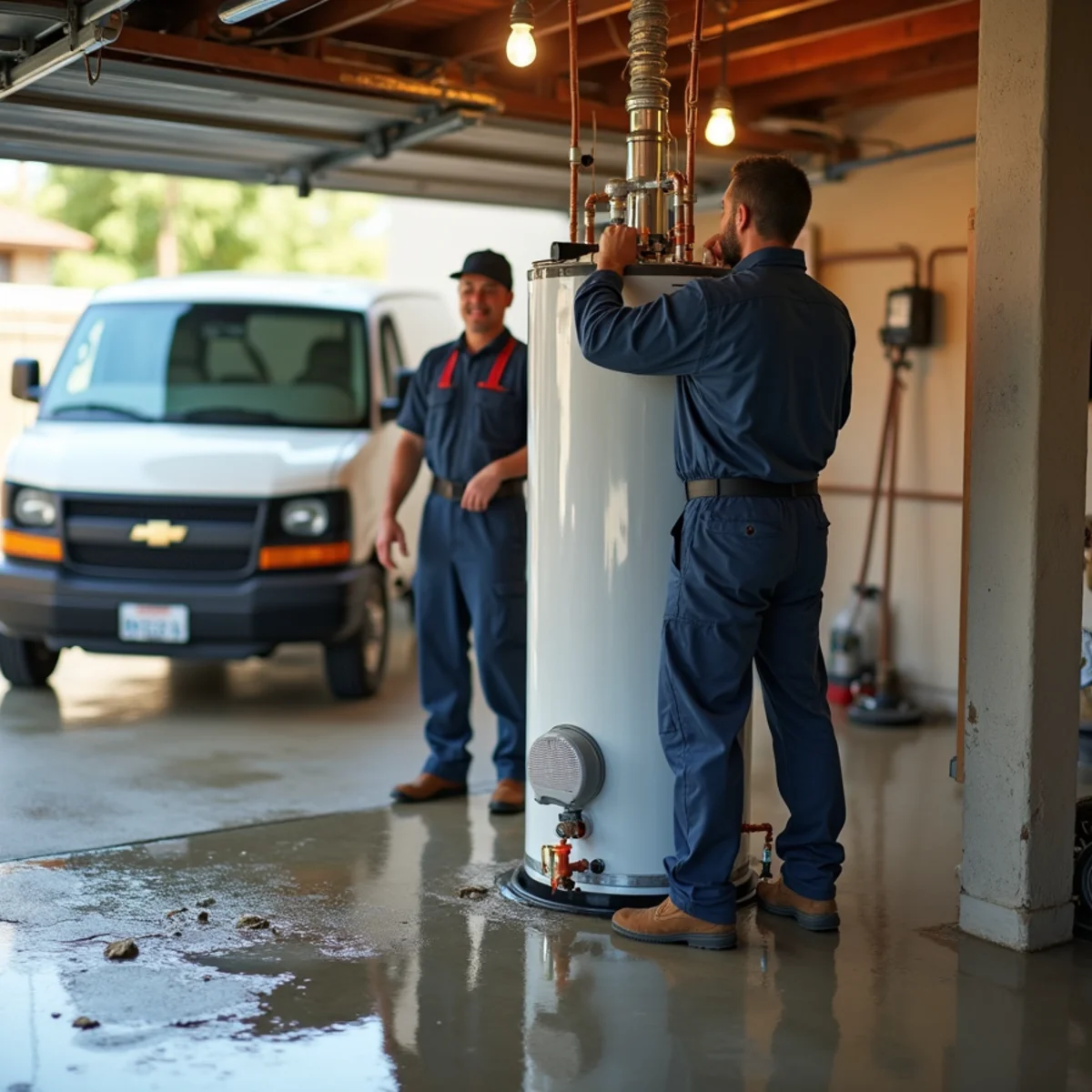
A water heater holds 40 to 50 gallons under pressure, and when the tank or a fitting fails, all of it looks for the nearest drain — which in a lot of Mayfair garages means straight toward the door into the house. The tank itself is rarely the whole story; a leak can also mean the pressure relief valve, the inlet line, or a rusted-through tank bottom.
Whatever the cause, the response is the same: get the water and gas or power off, keep it from reaching the living space, and get an assessment before you decide what's salvageable.
Shut Off the Water Supply to the Tank
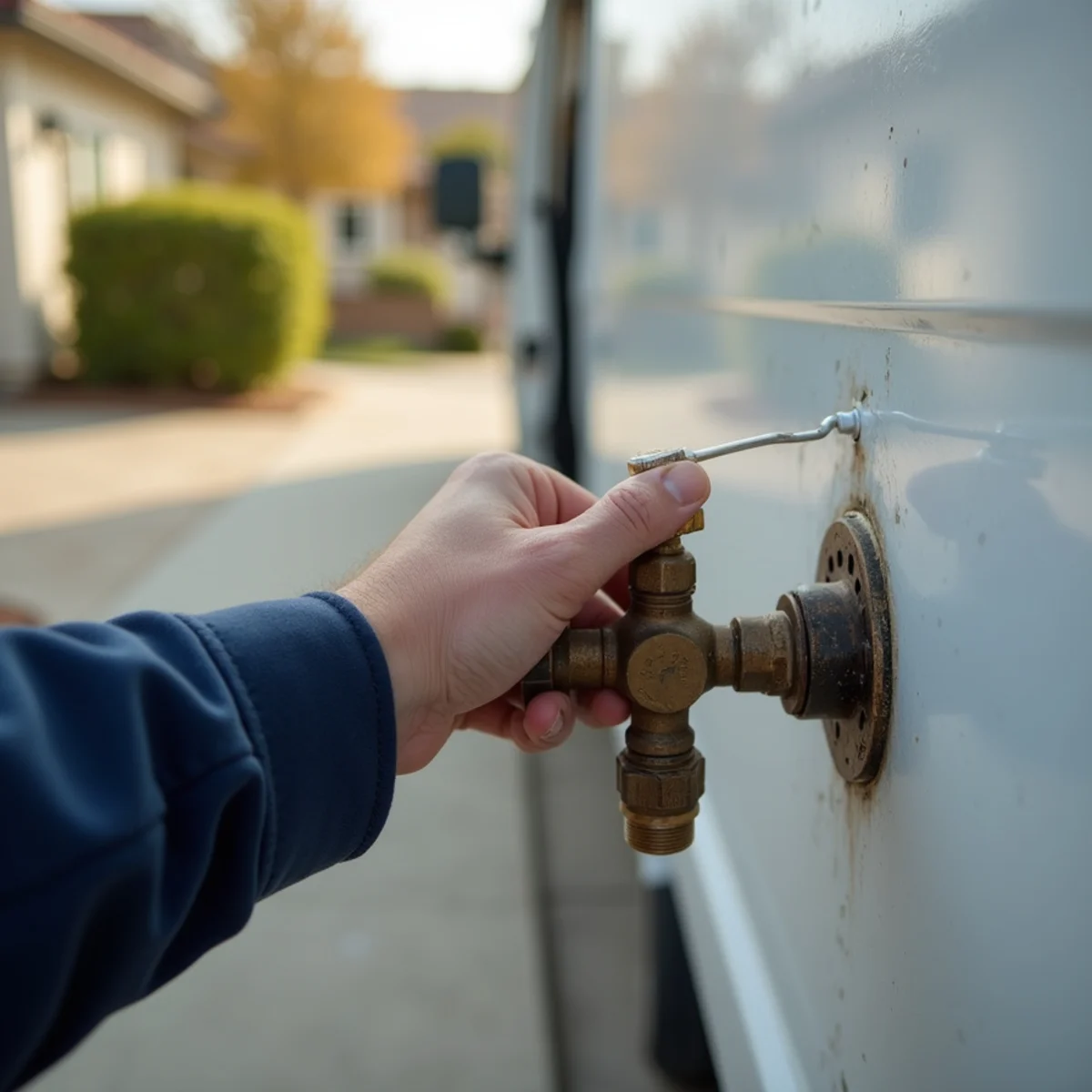
- Find the cold water inlet valve on top of the water heater and turn it clockwise until it stops.
- If that valve is corroded or won't budge, shut off your home's main water valve instead.
- Watch the leak for a minute after closing the valve — if it keeps flowing, the water heater isn't the only source and you likely have a separate line feeding the garage.
Turn Off Gas or Electric Power to the Unit
For gas water heaters, turn the gas control valve to "off" — don't just shut off the pilot. For electric units, switch off the dedicated breaker at your panel. Never touch an electrical panel while standing in water; if the flooding is close to the panel, leave power on and call for help instead.
Move Stored Items Off the Floor
- Cardboard boxes wick water fast — lift them onto shelving or a workbench immediately
- Check for items against the shared wall with the house; that's the path water takes into interior rooms
- Unplug and lift any electronics or tools off the garage floor
- Sweep or squeegee water toward the garage door threshold if it slopes that way, away from the house
A garage slab usually sits slightly lower than the interior floor, but not always. If your garage floods toward the house instead of away from it, a towel barrier at the connecting door can buy you time.
Know When a Water Heater Is Beyond a Quick Fix
A water heater tank that's rusted through at the bottom seam can't be patched — it needs replacement, not repair. If the leak is coming from a fitting or the temperature and pressure relief valve, a plumber may be able to isolate and fix it without a full tank swap. Either way, don't run the water heater again until someone's confirmed the source.
Get the Standing Water Out Before It Spreads
Garage floors are usually bare concrete, which feels forgiving, but water sitting against drywall, baseboards, or stored belongings for more than a day starts causing damage — and mold can take hold within 24 to 48 hours in wet cardboard, insulation, or wood shelving. Our water heater leak cleanup crews handle extraction, drying, and moisture checks behind walls so water that's migrated past the slab doesn't turn into a bigger repair later.
Call for Help Anywhere in Mayfair
If your water heater has flooded the garage, call Water Damage Lakewood at +1 (201) 277-9344. We're IICRC-certified, available 24/7, and typically on-site within about 60 minutes across Mayfair and the rest of the Gateway Cities area.
Why garage water ends up in your living room
Most Lakewood water heaters sit in the garage on the slab. When the tank lets go, people assume the concrete floor and the roll-up door will contain it. They usually do not. The garage slab is often poured a step higher than nothing and slopes toward the interior threshold, so the water finds the doorway into the hallway or den.
A drain pan under the tank buys you time, but only if it is plumbed to a drain and not cracked. The seismic straps matter for a different reason: in a shake, an unstrapped tank can topple and shear its supply line, turning a slow leak into a full flood. When we respond, we check the threshold first, because that seam is where garage water crosses into finished space.
- Shut the cold-water supply valve on top of the tank
- Kill the gas or breaker to the unit before anything else
- Check the threshold into the house for water already crossing
- A drain pan only helps if it drains and is not cracked
- Strapped tanks are less likely to shear a line in a quake
Related help from our team
Frequently Asked Questions
How many gallons can a failed water heater release?
A standard residential tank holds 40 to 50 gallons, and a full tank failure empties that plus whatever the supply line adds before you shut the water off — often 60 gallons or more.
Is water heater leak water safe to clean up myself?
Water straight from a tank is generally clean, what's called Category 1 water. But once it's been sitting on a garage floor picking up dust, oil residue, or chemicals stored nearby, it's no longer clean water and should be treated more carefully.
How old is too old for a water heater?
Most tank water heaters last 8 to 12 years. If yours is in that range or older, a slow failure like this is a sign it's time to plan a replacement rather than a repair.