Removing the water is only half the job. Moisture soaks into wood framing, subfloor, and the back of drywall, where a towel and an open window will never reach it. Surfaces can feel dry while the structure behind them is still wet.
That hidden moisture is where mold takes hold, often within 24 to 48 hours. It rots the bottom plate of a wall, warps a subfloor into a squeak, and leaves a musty smell that never quite fades. Skipping proper drying is how a small leak becomes a demolition.
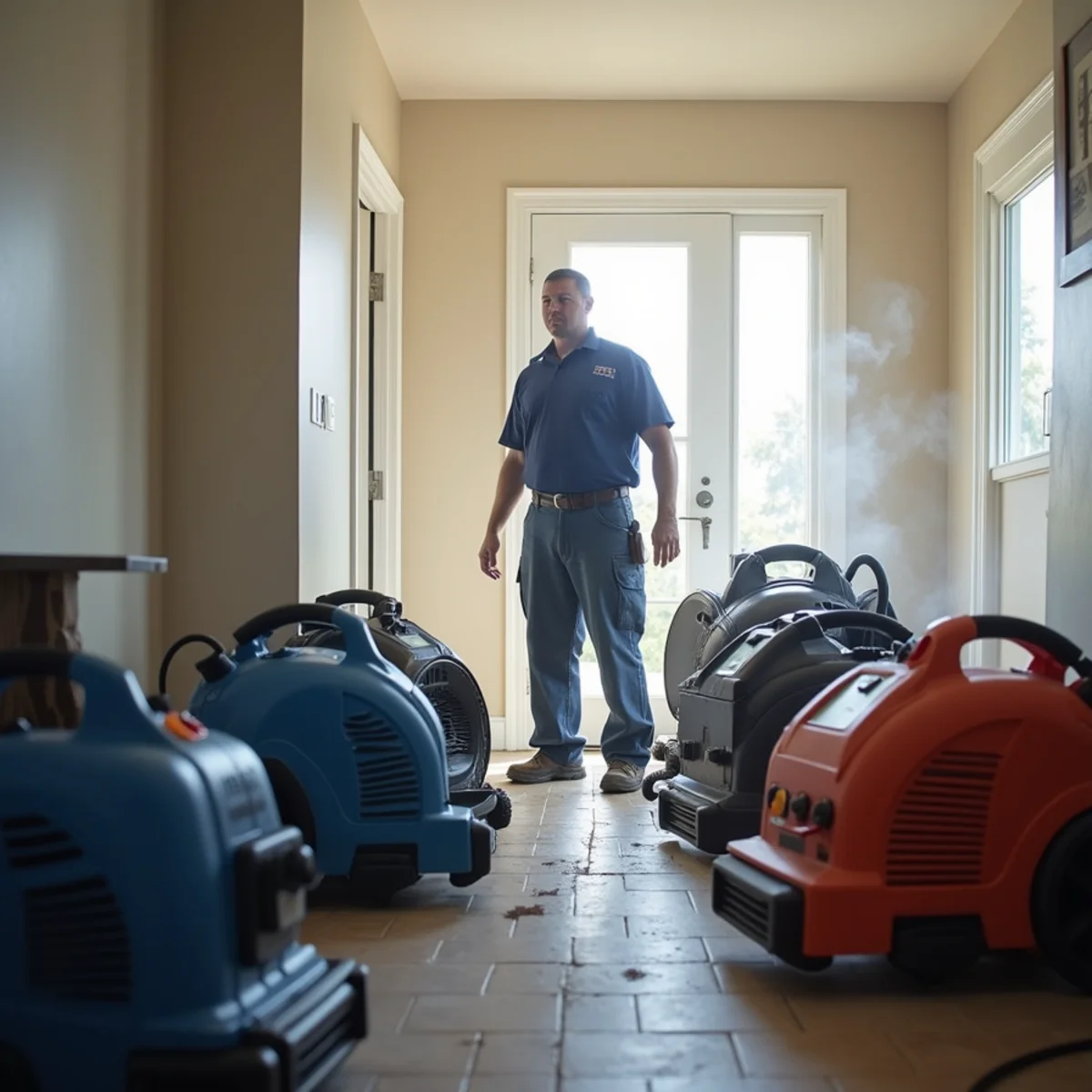
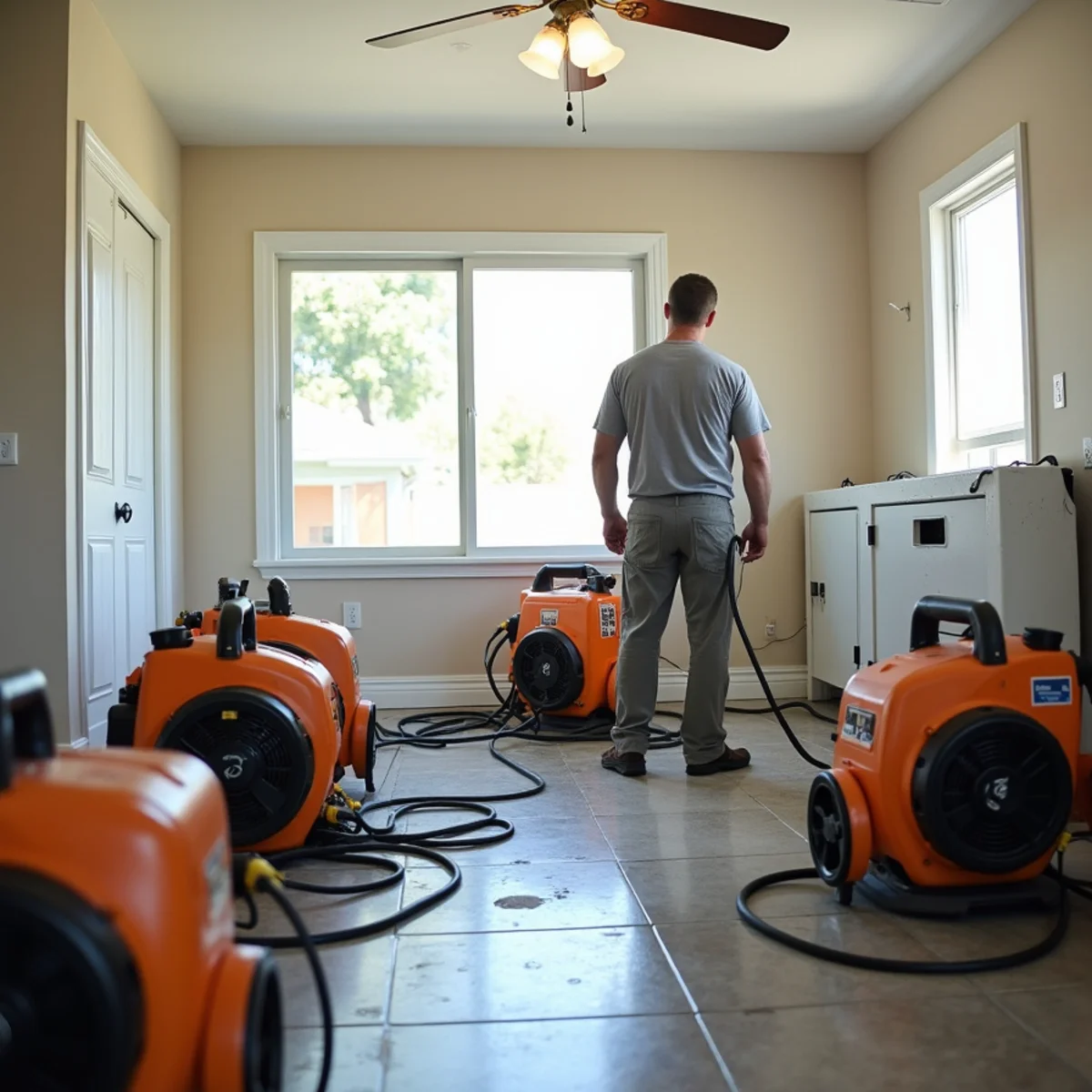
We dry the structure, not just the surface. Air movers push air across wet materials while dehumidifiers pull that moisture out of the room. Dehumidification — actively removing water vapor from the air — is what keeps evaporated moisture from settling somewhere new. Call +1 (201) 277-9344.
Signs Your Structure Is Still Wet
- A musty or damp smell that returns after surfaces feel dry
- Cool, clammy air in a room days after a leak
- Paint or wallpaper that bubbles, cracks, or peels
- Floors that squeak or feel spongy where they did not before
- Condensation on windows or baseboards in the affected room
- Dark spotting appearing at the base of walls
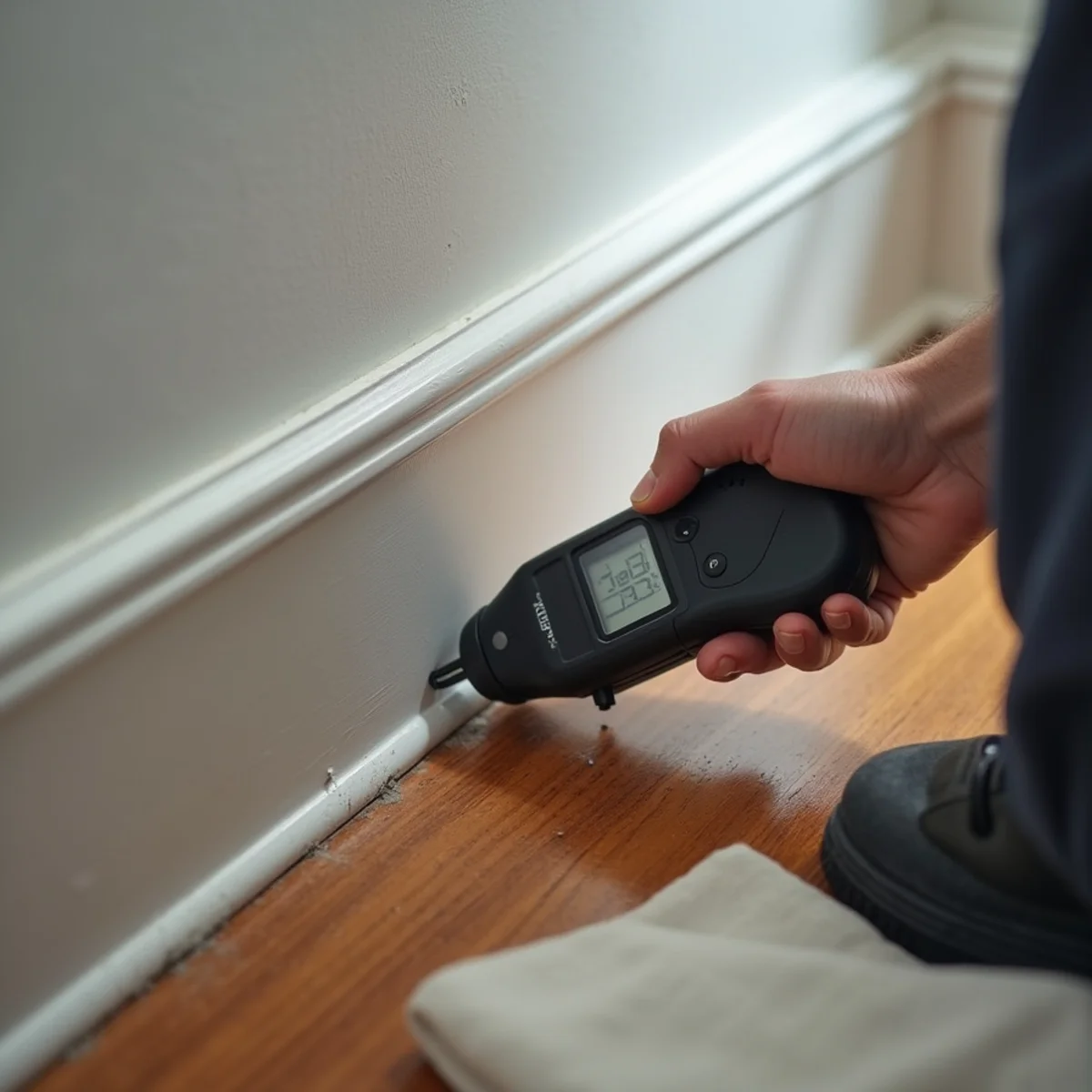
- A moisture meter reading above the dry standard for the material
What causes structural drying & dehumidification in Lakewood homes
Extraction removes the water you can see. What stays behind soaks into framing, drywall, and slab, and that hidden moisture is what we dry out.
- Moisture wicking up drywall and baseboards after standing water is pumped out
- Water trapped under vinyl and laminate flooring glued to the concrete slab
- Adobe clay soil under the slab holding humidity against the foundation for weeks
- Wet insulation and framing inside wall cavities that air alone cannot reach
- Coastal Lakewood humidity slowing evaporation and keeping damp materials wet longer
- Saturated wood subfloors and joists that swell, cup, and grow mold if left damp
What's included
Exactly what this service covers — clear line items, no surprises.
- Custom drying plan based on affected materials and layout
- High-velocity air movers positioned to sweep wet surfaces
- Commercial LGR or desiccant dehumidifiers sized to the space
- Wall-cavity drying with injection systems where needed
- Daily moisture and humidity logs for each drying zone
- Equipment adjusted as materials release trapped water
- Final readings confirming framing meets dry standard
How It Works
How We Handle Structural Drying & Dehumidification in Lakewood
Drying is measured work, not guesswork.
- 1
Set drying goals
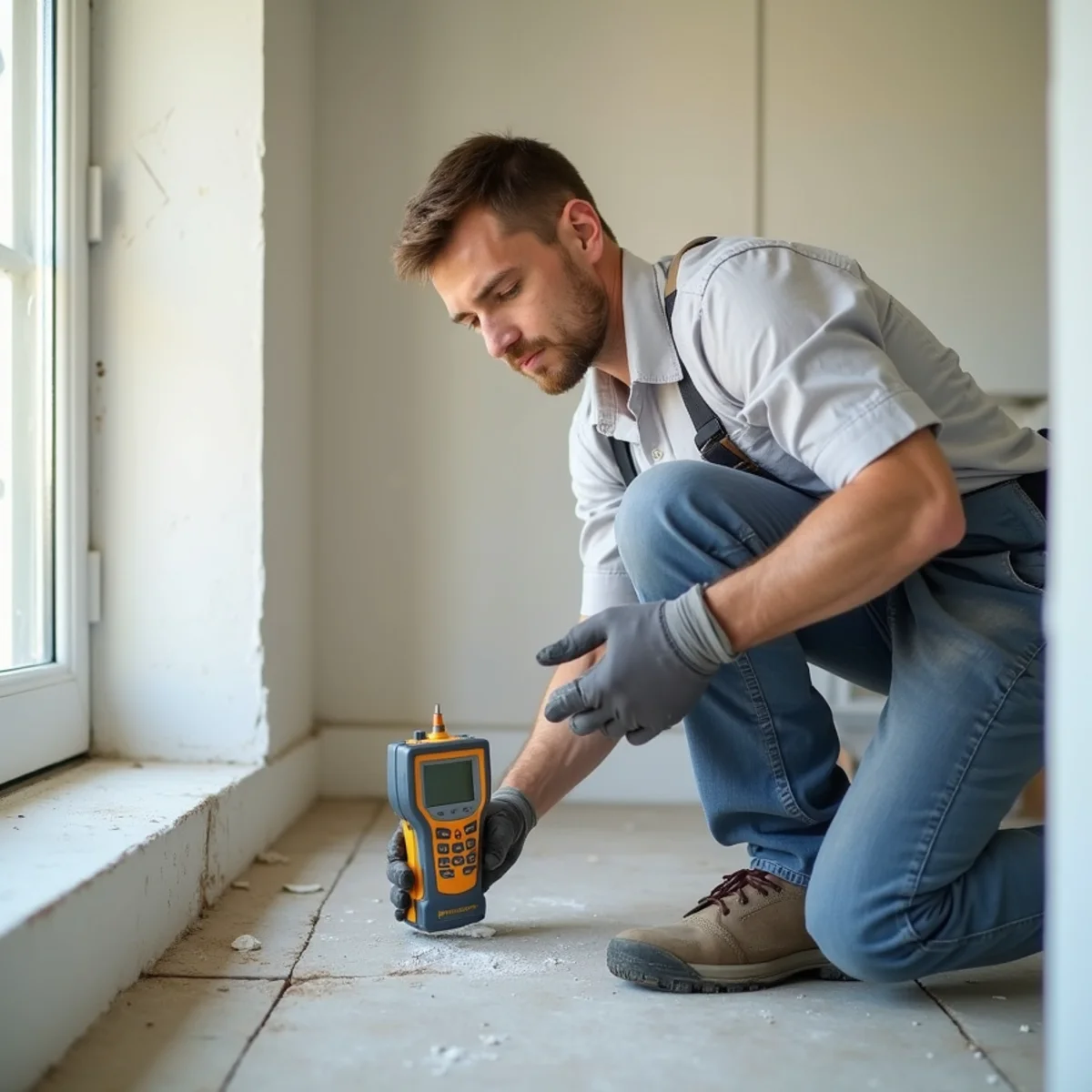
We take moisture readings on wet and unaffected materials to set a dry target. Every material has a normal moisture level, and that number is the finish line.
- 2
Position air movers
High-velocity air movers are placed to sweep air across wet surfaces. Moving air speeds evaporation so moisture leaves the material and enters the room air.
- 3
Run dehumidifiers
Industrial dehumidifiers pull that airborne moisture out and drain it away. Without them, evaporated water just re-soaks into drier materials nearby.
- 4
Contain and control
Where it helps, we contain the drying area and manage temperature to keep the process efficient and predictable.
- 5
Daily monitoring
We return to read moisture levels each day and adjust equipment. Drying is not done until the readings hit the target, not just when things feel dry.
- 6
Verify and remove
Once materials reach the dry standard, we confirm with a final round of readings, pull the equipment, and document the results for your records.
What Affects the Cost
Drying is priced mainly by how many days of equipment the structure needs and how many machines it takes. A one-room dry-out is modest; a whole-home saturation runs higher. We explain the plan before the machines run.
- The number of air movers and dehumidifiers the space requires
- How many days the materials take to reach the dry target
- The type of materials involved — drywall, hardwood, concrete, or plaster
- Total square footage and ceiling height of the wet area
- How saturated the framing and subfloor became
- Electricity load and whether generators or extra power are needed
We never quote a firm price sight-unseen. You'll get an honest, itemized estimate on-site, and we work directly with your insurance adjuster on covered losses.
Why Lakewood Homeowners Call Us
Lakewood's coastal-adjacent humidity works against fast drying. Marine layer mornings raise the outdoor moisture level, which is exactly why open windows and box fans do not finish the job here. Industrial dehumidifiers give us control the weather will not.
The slab-on-grade homes across the city hold moisture in the concrete itself. Concrete releases water slowly, so a slab that got soaked needs sustained dehumidification to reach a stable dry reading. We plan for that instead of pulling equipment too early.
Working out of northeast Lakewood near the 605, our crews can return daily to monitor readings without a long haul. That daily check is what separates a proper structural dry from a rush job that leaves moisture behind the walls.
Why Choose Us
Why choose Water Damage Lakewood for structural drying & dehumidification
60-minute dispatch across Lakewood
Crews dispatched from Lakewood — we aim to be on-site within about an hour, because water spreads by the minute.
Answered live, 24/7
A real person picks up day or night, weekends and holidays, and gives you clear steps while we head your way.
IICRC-Certified Technicians
We dry to the IICRC standard using moisture meters — not guesswork — so your home is verified dry, not just dry to the touch.
We handle your insurance
Photo and moisture documentation, adjuster-ready scopes, and direct billing on covered losses.
Licensed & Insured
Local crews with 15+ years of restoration experience — accountable, local, and easy to reach.
Areas we serve for structural drying & dehumidification
Fast local response across Lakewood and the Gateway Cities.
Structural Drying & Dehumidification: Common Questions
How long does structural drying take?
Most jobs run three to five days, but it depends on the materials and how wet they got. Concrete and dense hardwood dry slowly. We measure moisture daily and stop only when the readings hit the target, so we never guess at the finish.
Why can't I just use my own fans?
Household fans move air but do nothing about the moisture that air picks up. Without a dehumidifier pulling that water vapor out of the room, it simply re-soaks into other materials. That is how mold gets started even after the floor looks dry.
Will the equipment be loud or use a lot of power?
Air movers and dehumidifiers do run continuously and draw real power, which is why we size the setup to the job. We position units to dry efficiently and remove them as soon as the readings allow, keeping runtime as short as the structure permits.
Can you dry my walls without removing the drywall?
Often, yes. When the drywall is sound, we can dry the cavity in place using injection systems and targeted airflow. If the material is crumbling or contaminated, removal is safer and faster. Moisture readings guide that call, not guesswork.
How do you know when the drying is actually finished?
We set a dry standard from unaffected areas of your home and measure against it daily. Framing, subfloor, and drywall each have a target moisture level. When every monitored point holds at that level, drying is done and we pull the equipment.
Why does the air feel warm and humid while equipment runs?
Air movers and dehumidifiers add heat and pull moisture out of materials into the air, which the dehumidifiers then remove. The space can feel warm and stuffy while that exchange runs. It means the process is working, and it settles once materials release their water.