
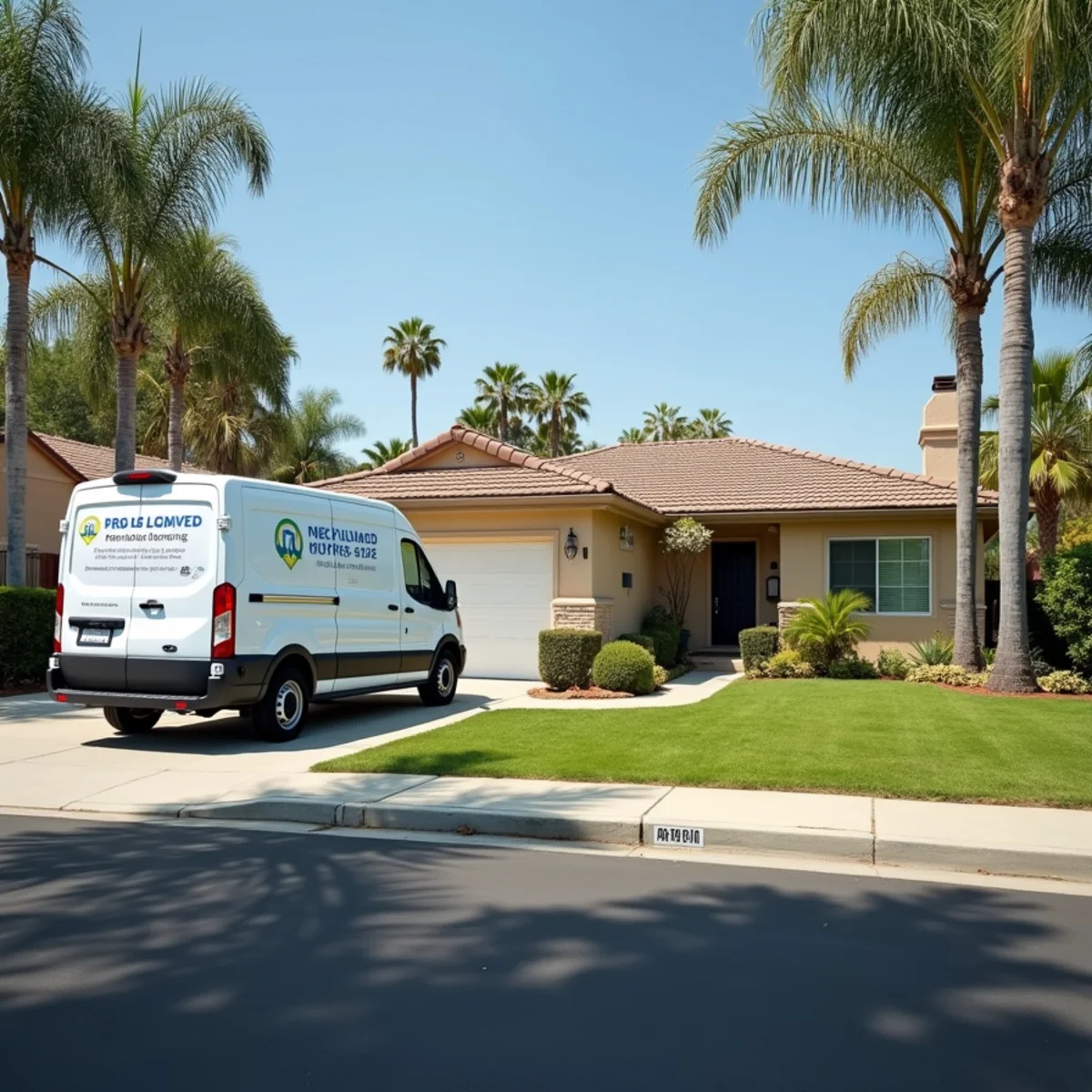
Hawaiian Gardens is the smallest city in Los Angeles County, under a square mile squeezed against Lakewood's eastern edge. That makes it a quick run for us, straight out Carson St. In a city built this densely, water rarely stays put — it travels between units and down through floors fast.
We answer 24/7 and handle the insurance paperwork so you do not have to chase it. Most of the housing here is apartments sharing older plumbing, which means a single failure often becomes several units' problem in a hurry, and we plan our response around that from the first call.
Fast response to Hawaiian Gardens
Dispatched from 3700 N Industry Ave, Lakewood, CA 90712. Call (201) 277-9344 — we answer live, 24/7.
Water Damage Risks in Hawaiian Gardens
The city built out mostly in the 1960s and 1970s as apartment tracts. Shared supply and drain lines serve whole buildings, and those lines are now decades past their prime. When one corrodes through, the water rarely stays in the unit where it started, following the framing to the units next door and below.
Density is the defining risk here. A single upstairs overflow can soak the units beneath it and the walls in between. On the clay soil under these buildings, standing water and trapped moisture push mold growth into the 24-to-48-hour window quickly, so fast extraction and real drying matter more than usual.
Local Knowledge You Can Count On
We work the apartment rows along Carson St and Norwalk Blvd, and the streets around the C-Gardens casino. The tight street grid means we stage our equipment carefully, so we can run air movers and dehumidifiers across several units without blocking the driveways or the block.
A typical Hawaiian Gardens call is a second-floor water heater that lets go and floods the stairwell and the units beneath it. We regularly set containment across a building, dry the shared walls from both sides, and check each affected unit with a moisture meter before we call it done.
Water damage we handle most in Hawaiian Gardens
Hawaiian Gardens is built mostly of dense 1960s and 70s apartment buildings. Shared plumbing stacks and second-floor units mean a single failed line can soak several apartments at once. Most Hawaiian Gardens jobs involve water dropping through ceilings and floors between units.
Ceiling Water Damage Repair
Ceiling water damage repair for Lakewood homes — we trace the leak, dry the framing above, and restore stained or sagging ceilings so the damage does not return.
Learn moreWater Extraction & Removal
Rapid removal of standing water from Lakewood homes and businesses using truck-mounted and portable extractors, so drying can start before materials are ruined.
Learn moreWater Damage Restoration
Full water damage restoration for Lakewood homes and businesses — extraction, drying, and repair, with direct insurance billing and crews dispatched around the clock.
Learn moreOur services in Hawaiian Gardens
Every part of the job, handled by one local crew.
Water Damage Restoration
Full water damage restoration for Lakewood homes and businesses — extraction, drying, and repair, with direct insurance billing and crews dispatched around the clock.
Learn more24/7 Emergency Water Removal
Around-the-clock emergency water removal in Lakewood, with crews dispatched day or night and a target arrival of about 60 minutes to stop the damage fast.
Learn moreWater Heater Leak Cleanup
Water heater leak cleanup for Lakewood homes — extraction, drying, and mold prevention after a leaking or burst tank floods the garage or utility area.
Learn moreMold Remediation
Certified mold remediation for Lakewood properties — containment, safe removal, and moisture correction so the mold does not simply grow back after cleanup.
Learn moreCeiling Water Damage Repair
Ceiling water damage repair for Lakewood homes — we trace the leak, dry the framing above, and restore stained or sagging ceilings so the damage does not return.
Learn moreStructural Drying & Dehumidification
Certified structural drying and dehumidification for Lakewood properties, using air movers and industrial dehumidifiers to dry framing, subfloor, and drywall to a measured target.
Learn moreWhy Choose Us
Why Hawaiian Gardens residents choose Water Damage Lakewood
60-minute dispatch across Lakewood
Crews dispatched from Lakewood — we aim to be on-site within about an hour, because water spreads by the minute.
Answered live, 24/7
A real person picks up day or night, weekends and holidays, and gives you clear steps while we head your way.
IICRC-Certified Technicians
We dry to the IICRC standard using moisture meters — not guesswork — so your home is verified dry, not just dry to the touch.
We handle your insurance
Photo and moisture documentation, adjuster-ready scopes, and direct billing on covered losses.
Licensed & Insured
Local crews with 15+ years of restoration experience — accountable, local, and easy to reach.
Hawaiian Gardens: Water Damage FAQs
How quickly can you get to Hawaiian Gardens?
Usually about 8–10 minutes from our Lakewood base along Carson St. We target an on-site arrival within 60 minutes for emergencies, and we come ready to extract standing water and start drying immediately.
The leak spread to my neighbor's unit. Can you dry both?
Yes. Multi-unit drying is routine here. We dry the shared walls and ceilings from both sides and coordinate access with each resident so no wet cavity gets missed. Call +1 (201) 277-9344.
Why does mold seem to grow so fast in these apartments?
Trapped moisture inside shared walls has nowhere to vent, so it lingers. Mold can begin within 24–48 hours, which is why we dry the wall cavities themselves, not just the visible surfaces, and treat what cannot be dried in place.
Do you respond to water emergencies in Hawaiian Gardens at night?
Yes, we answer calls in Hawaiian Gardens around the clock, including nights and weekends. Since the city is close to our Lakewood base, our roughly 60-minute response holds even after hours. A fast start matters most in the first hours after a pipe breaks.
What causes most water damage in Hawaiian Gardens homes?
Many Hawaiian Gardens homes are compact postwar tract houses with original galvanized plumbing that has thinned over the decades. Slow leaks behind walls and under sinks are the usual culprits. We find the source, dry the area, and check nearby framing for hidden moisture.