
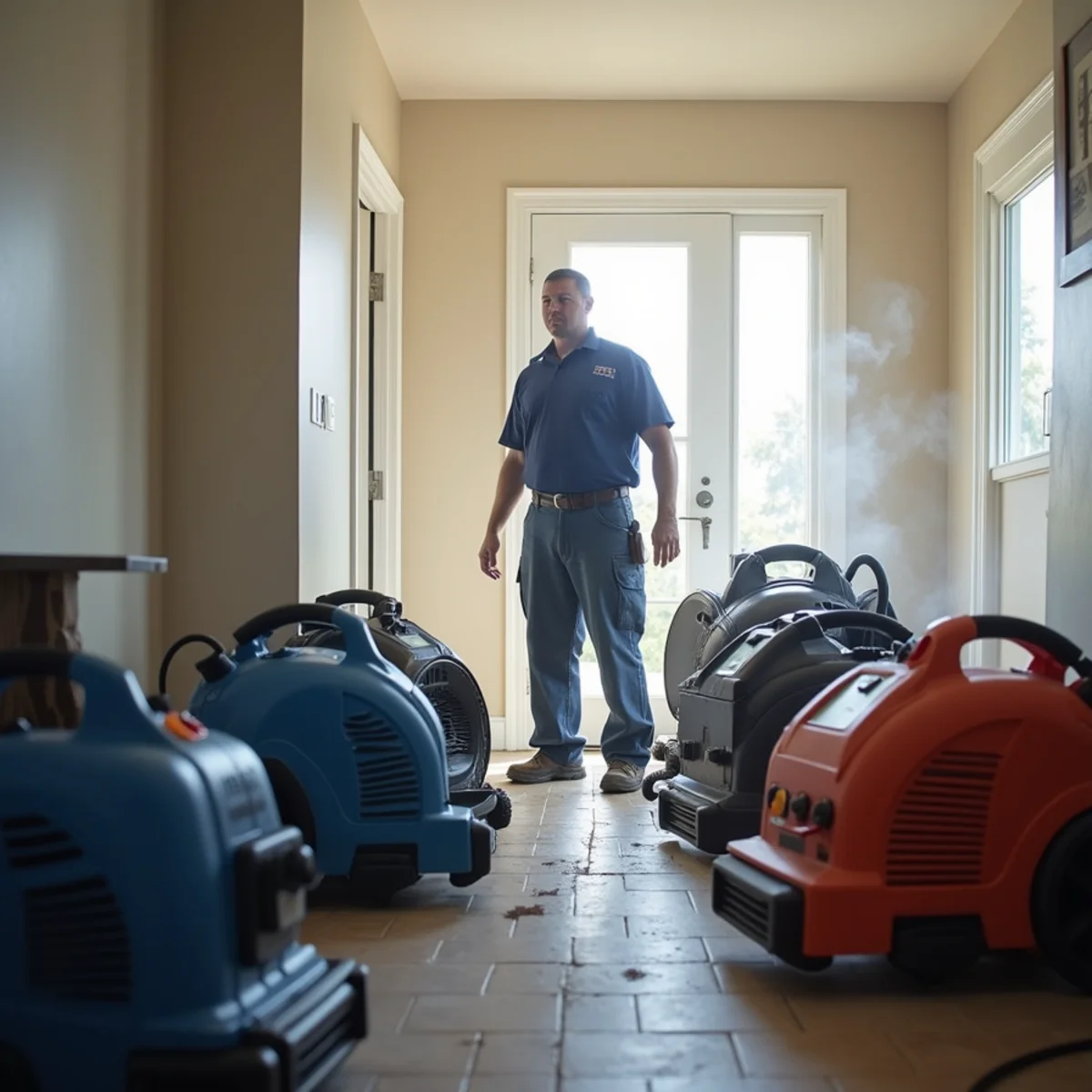
"How long will this take?" is usually the first question after the initial mess is cleaned up. The honest answer is that structural drying timelines depend on the room, the materials involved, and how much water got in — not a single number that applies everywhere.
For a typical residential water loss in Westgate, here's a realistic breakdown of what drying actually looks like, day by day, and what can stretch it longer.
The Short Answer
Most rooms with a straightforward, clean-water loss dry within 3 to 5 days once equipment is running. Rooms with hardwood floors, multiple wet layers, or contaminated water can take a week or longer.
That timeline starts once air movers and dehumidifiers are set up and running continuously — not from when the leak happened.
Why Every Room Dries at a Different Speed
- Carpet and pad: usually the fastest, often 2 to 4 days
- Drywall: typically 2 to 5 days depending on how far up the wall it's wet
- Hardwood flooring: often the slowest, sometimes 5 to 10+ days because wood absorbs and releases moisture slowly
- Subfloor and framing: can take a week or more if water got underneath
- Cabinetry and built-ins: variable, since trapped moisture behind cabinets is hard to reach
What Speeds Drying Up — and What Slows It Down
Fast extraction in the first few hours makes the biggest difference in total drying time. The less water that has to evaporate, the faster the room dries. Airflow and controlled humidity do the rest.
Humid weather slows drying because there's less capacity for the air to hold additional moisture. That's part of why atmospheric river storms in Southern California can stretch drying timelines during a wet winter.
Closing doors and blocking air movers "to keep the noise down" is one of the most common ways homeowners accidentally slow down their own drying job.
How Progress Gets Measured
We don't guess when a room is dry — we measure it. Daily moisture readings on drywall, subfloor, and framing get compared against a dry standard, usually based on an unaffected area of the same material in your home.
Drying is complete when readings are consistently at or near that dry standard for at least two consecutive checks, not just when the room feels dry to the touch.
A Realistic Room-by-Room Timeline
- Day 1: Extraction, initial moisture mapping, equipment setup
- Days 1–3: Carpet, pad, and painted drywall trend toward dry
- Days 3–5: Baseboards and lower wall cavities catch up
- Days 5–7: Subfloor under carpet or vinyl finishes drying
- Days 7–10+: Hardwood flooring and any areas with trapped moisture behind cabinetry or built-ins
When to Call
Our structural drying and dehumidification team monitors every room daily and adjusts equipment placement as readings change, rather than leaving fans running on a fixed schedule and hoping for the best.
We're on site within about 60 minutes across Westgate, 24 hours a day. Call +1 (201) 277-9344 to get drying started — every hour water sits adds to the timeline.
"Dry to the Touch" Fools People Every Time
A surface can feel dry while the material behind it is still soaked. Drywall, wood framing, and slab concrete hold moisture deep inside long after the paint feels cool and dry to your hand. Trust the feel and you seal water into a wall, which is how mold starts after everyone thought the job was done.
That is why we dry to a number, not a feeling. Each day we take moisture readings from the wet materials and compare them to a dry baseline elsewhere in the home. The equipment stays until the wet spots match the baseline. In Lakewood's humid coastal air, that verification step is what separates truly dry from apparently dry.
- Moisture content of framing and drywall, tracked against a dry reference point
- Daily readings so we can see the numbers actually falling
- Relative humidity and temperature inside the drying area
- Whether the trend has stalled, which points to hidden trapped water
Related help from our team
Frequently Asked Questions
How long does it take to dry out a water-damaged room?
Most rooms with clean water and prompt extraction dry within 3 to 5 days. Hardwood floors, contaminated water, or water that soaked subfloor and framing can extend that to a week or more.
How do you know when a room is fully dry?
Daily moisture readings on drywall, subfloor, and framing are compared to a dry standard from an unaffected part of the same material. Drying is done when readings hold steady near that standard for two consecutive checks.
Can I speed up drying by running my own fans?
Household fans move air but don't control humidity, so they can actually slow drying by pushing moisture around a closed room instead of removing it. Commercial air movers paired with dehumidifiers are what actually pull moisture out.