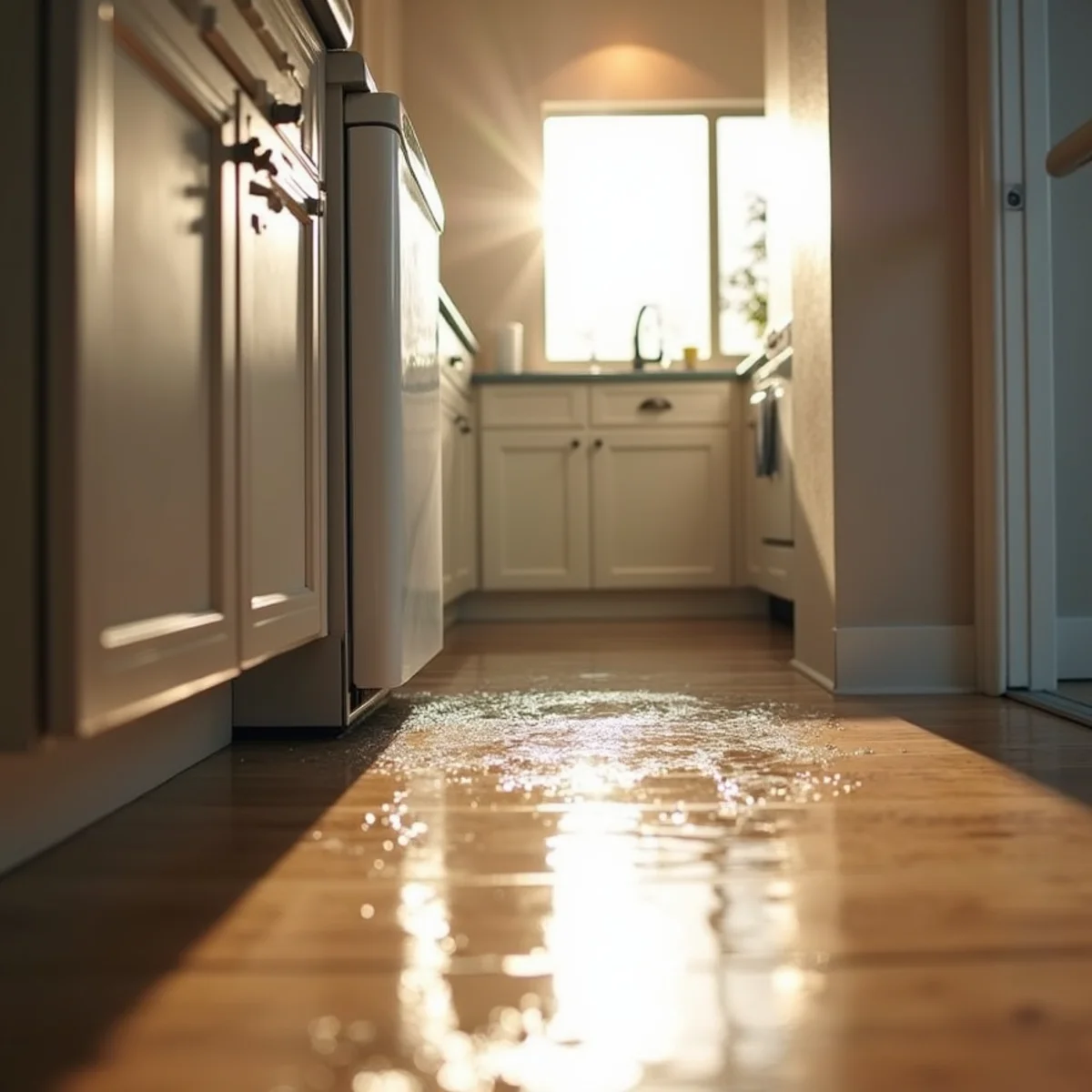
Overnight leaks are their own kind of frustrating, because by the time you find them, the water's already had hours to spread — under cabinets, into the toe kick, sometimes under the flooring itself. A dishwasher leak is usually slower than a burst pipe, but eight hours of steady dripping adds up fast, and kitchens have more places for water to hide than almost any other room.
If you've woken up to a flooded kitchen in Lakewood Shores or anywhere nearby, here's what to check and do, in order.
Shut Off the Dishwasher's Water Supply
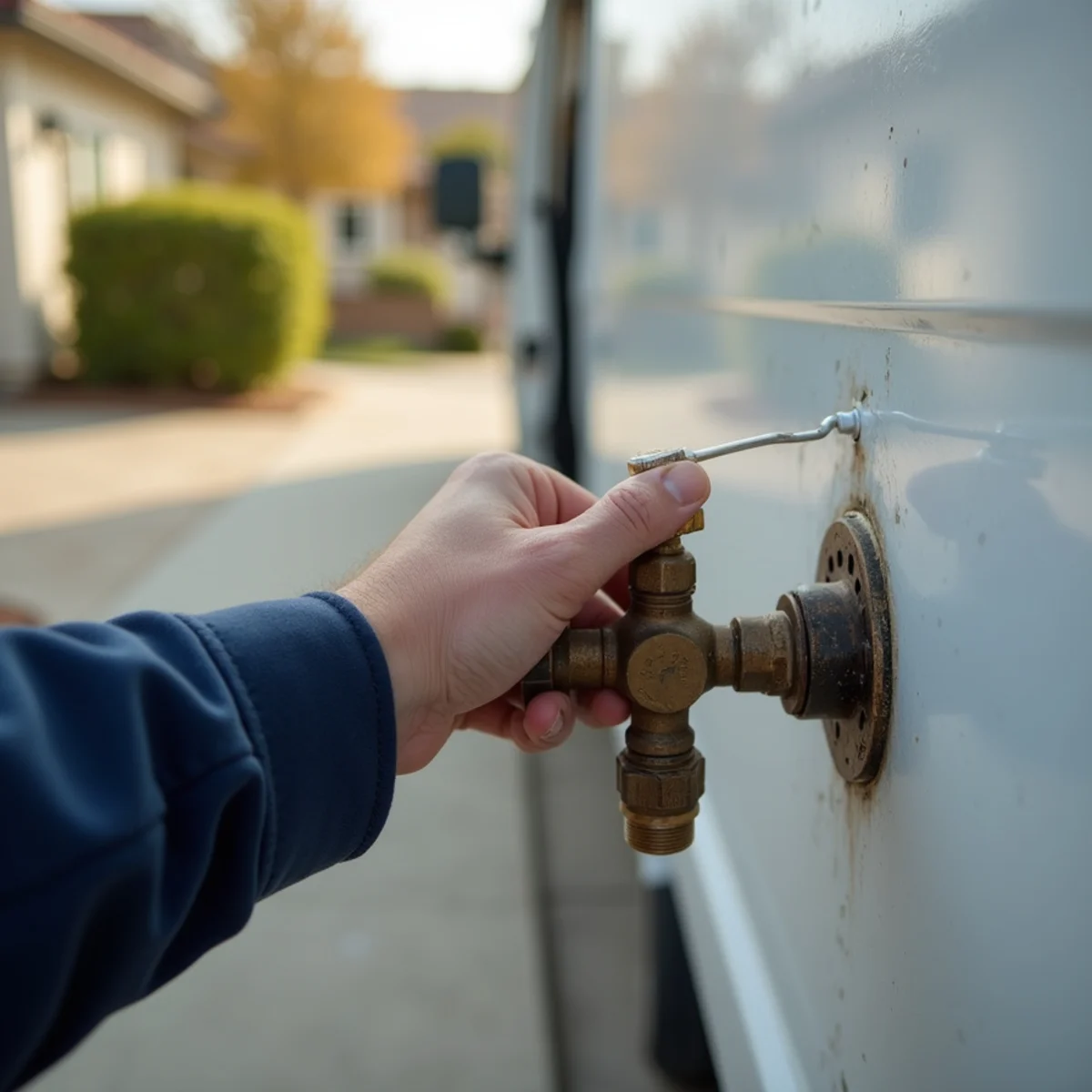
The shutoff valve is usually under the kitchen sink, on the line feeding the dishwasher — look for a small valve, separate from the main sink shutoffs. Turn it clockwise. If you can't identify which valve feeds the dishwasher specifically, shut off your home's main water valve instead until you can confirm.
Unplug or De-Power the Unit
Most dishwashers plug into an outlet inside the sink cabinet, or they're hardwired to a dedicated circuit. If it's plugged in and the outlet is dry, unplug it. If it's hardwired or the outlet area is wet, shut off the breaker instead of reaching into standing water.
Check Under the Cabinets, Not Just the Floor
- Open the cabinet under the sink and check the cabinet floor for pooling or swelling
- Feel the toe kick below the dishwasher and adjacent cabinets — it often absorbs water before it's visible anywhere else
- Check the cabinet floor in cabinets several feet away; water travels along grout lines and under flooring further than it looks
- Look at the base of the dishwasher itself for rust or standing water still trapped underneath
Pull the Dishwasher Out if You Can Do It Safely
If the unit isn't hardwired and you can disconnect it safely, sliding the dishwasher out lets you see and dry the floor and wall behind it directly. If it's built in tight or hardwired, leave that step to a professional rather than forcing it and risking a bigger leak.
Watch for Water Under the Flooring
Kitchen floors in Lakewood Shores are a mix of tile, vinyl, and laminate over original slab or subfloor, depending on when the kitchen was last remodeled. Water that's gotten under sheet flooring or laminate can sit trapped and invisible for days, which is exactly the kind of hidden moisture that leads to warping, delamination, and mold. A moisture meter reading, which restoration crews use to check under flooring without tearing it up, is the only reliable way to confirm it's dry.
Even if the surface looks dry by morning, water that reached under cabinets or flooring overnight often hasn't evaporated — it's just out of sight.
Get Extraction Started the Same Day
Cabinets, toe kicks, and subfloor all hold moisture longer than an open floor does, and mold risk starts within 24 to 48 hours regardless of how it looks on the surface. Our water extraction team serves Lakewood Shores and the surrounding area 24/7, typically arriving within about 60 minutes. Call Water Damage Lakewood at +1 (201) 277-9344 to get moisture checked and removed before it turns into a cabinet or flooring replacement.
The real damage is under the cabinets, not on the tile
The water you mop off the kitchen floor is the easy part. The problem is what ran under the cabinet toe-kicks overnight. That gap is only an inch or two high, but it channels water into the dark cavity beneath the cabinet boxes where no towel reaches and no fan blows.
From there the water wicks two directions. It soaks into the particleboard cabinet base, which swells and delaminates, and it spreads across the slab toward the adjacent dining room or hallway. In Lakewood's slab-on-grade homes, that moisture can travel under a wall and surface as a damp baseboard in the next room. We pull a toe-kick and meter the cavity because a dry-looking floor hides a wet subsurface.
Pull one toe-kick panel and shine a light underneath — if it is wet under there, drying the visible floor will not stop the mold.
Related help from our team
Frequently Asked Questions
How do I know if water got under my kitchen flooring?
Look for edges lifting, a soft or spongy feel when you walk on it, or a musty smell days later. A moisture meter, which professionals use to test under flooring without removing it, gives a definitive answer.
Can I just dry the kitchen floor myself with fans?
Fans help with surface moisture, but they don't reach water trapped under cabinets, inside toe kicks, or beneath sheet flooring. Those areas usually need professional extraction and monitored drying equipment.
Why do dishwasher leaks often go unnoticed overnight?
Dishwashers usually run at night or while people are out, and the leak point — a worn door seal, a cracked hose, or a failed pump — is often small and slow rather than a sudden burst, so water spreads quietly for hours before it's visible.