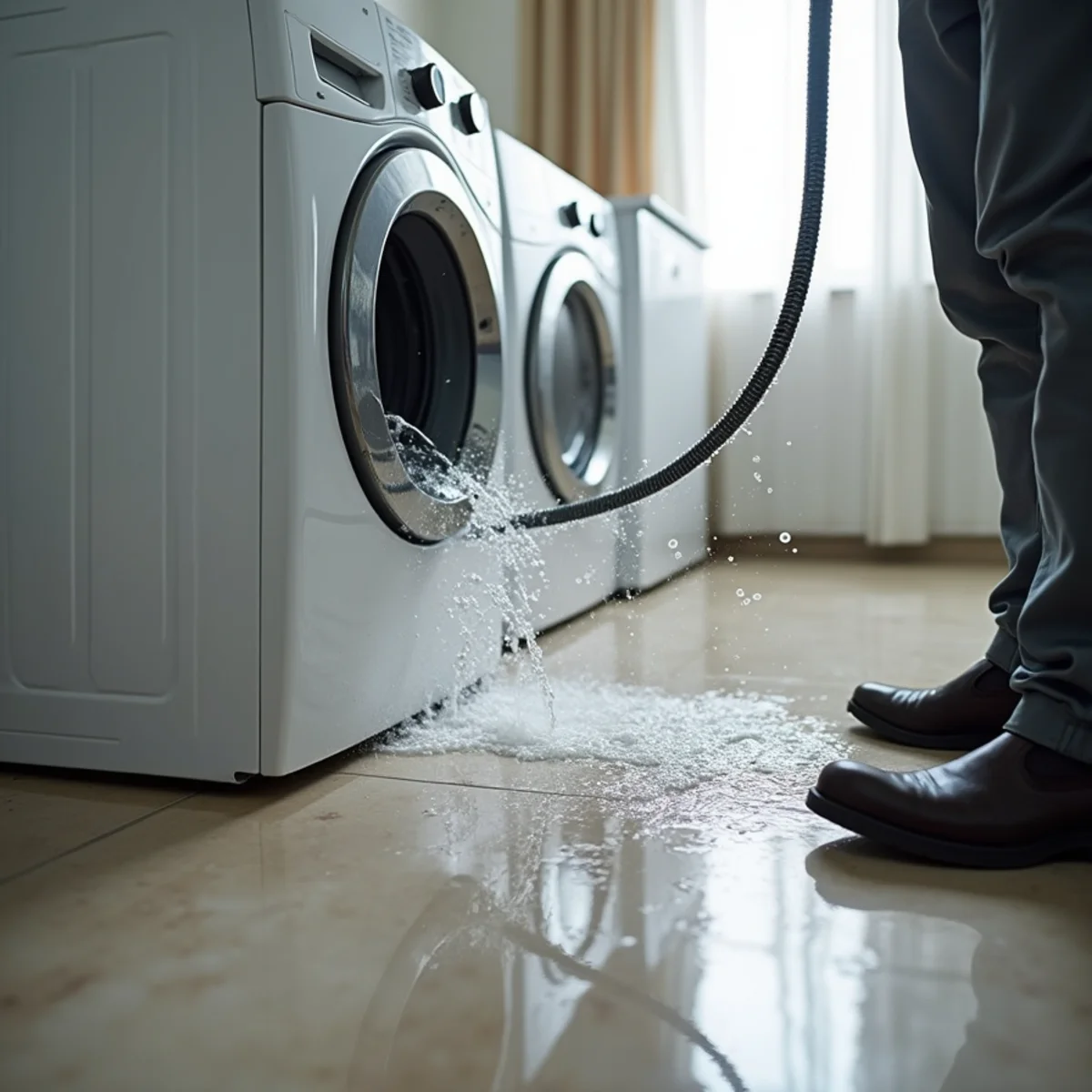
Washing machine supply hoses are under constant water pressure, 24 hours a day, whether the machine is running or not. Rubber hoses degrade over years of that pressure, and when one gives out, it can spray several gallons a minute across a laundry room — and often through the wall into an adjoining room, since laundry areas are rarely sealed against water the way a bathroom is.
If you've found a burst hose, don't chase the spray. Go straight for the source. Here are the five steps that limit how far the water gets.
1. Shut Off the Machine's Water Valves
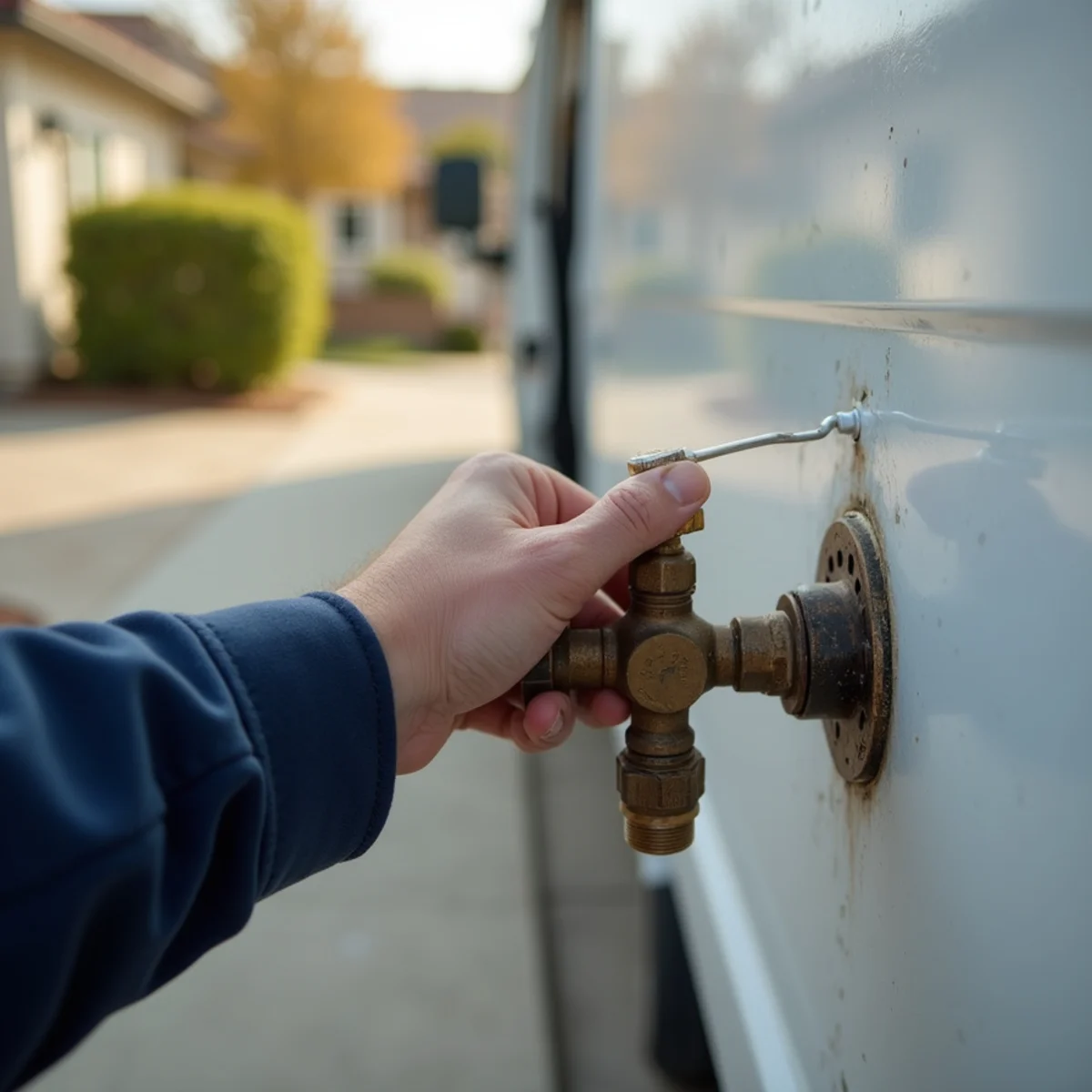
Most washing machines have two valves — hot and cold — usually mounted on the wall directly behind or beside the unit. Turn both clockwise until they stop. If you can't reach them because of standing water or space, shut off your home's main water valve instead.
2. Unplug the Machine
Once the water's off, unplug the washing machine at the outlet, not at the breaker, if you can safely reach the cord without standing in water. If the outlet itself is wet, leave it and shut off the breaker for that circuit instead.
3. Stop the Water From Spreading Into Adjoining Rooms
- Lay towels or a rolled rug at the laundry room threshold to slow water reaching hallways or bedrooms
- Check the wall the machine backs onto — water pressure from a burst hose can push water through outlet gaps and baseboards on the other side
- Move anything stored on the laundry room floor, especially cardboard or fabric, up off the ground
4. Extract Standing Water Quickly
A wet-dry shop vac handles small amounts well. For anything beyond a puddle, especially if it's reached carpet, laminate, or has been sitting for more than an hour, professional water extraction pulls moisture out of flooring and subfloor before it soaks in permanently. Cherry Cove homes with laundry rooms opening directly onto living spaces are especially prone to water traveling further than expected from a burst hose.
5. Check the Hose Type Before You Replace It
Standard rubber hoses typically last 3 to 5 years before they should be replaced proactively. Braided stainless steel hoses hold up longer and resist bursting under pressure much better — worth the upgrade cost after an incident like this, since the alternative is repeating this exact situation.
Set a reminder to inspect washing machine hoses every year for bulges, cracks, or rust at the fittings — most bursts show warning signs before they fail completely.
If Water's Already Spread, Call for Extraction
Once the immediate flow is stopped, the clock starts on drying. Call Water Damage Lakewood at +1 (201) 277-9344 for water extraction anywhere in Cherry Cove — we're available 24/7 and typically on-site within about 60 minutes to get moisture out of flooring before it becomes a bigger repair.
"Braided Stainless" Is Not the Same as Failure-Proof
Braided stainless hoses fail more often than people expect. The steel braid is a jacket. Inside sits a rubber or plastic tube that still ages, cracks, and splits. When the inner liner goes, the braid does nothing to stop the water. We see these let go on machines that ran fine for years.
Age and pressure do the damage. A hose under constant line pressure hardens over time, and a washer left running while nobody is home turns a small split into hundreds of gallons on the floor. In Lakewood's slab tract homes, that water spreads flat and wide across the pad before anyone notices.
- Replace supply hoses every five years, sooner if the rubber feels stiff
- Buy hoses you can date, and note the install month somewhere visible
- Shut both valves off before any trip longer than a weekend
- Leave a few inches of slack so the hose isn't kinked at the connection
- Add a simple auto-shutoff or leak sensor behind the machine
Related help from our team
Frequently Asked Questions
How much water can a burst washing machine hose release?
A burst supply hose can release several gallons a minute at full household water pressure, which means an unattended burst can put out hundreds of gallons before anyone notices.
Should I upgrade to braided steel hoses?
It's worth it. Braided stainless steel hoses resist bursting far better than standard rubber hoses and typically last longer, which matters since the hoses are under pressure at all times, not just when the machine runs.
Is washing machine water considered contaminated?
Washing machine discharge is generally classified as Category 2, or gray water, since it can carry detergent residue and some contaminants. Supply line water before it reaches the machine is Category 1, clean water.