California Health & Safety Code Section 19211 requires that water heaters be braced, anchored, or strapped to resist falling or moving during an earthquake. It's a short, specific law, but it exists because an unsecured water heater is a genuine hazard — both from the tank itself falling and from the water damage that follows when the connections tear loose.
Most homeowners have heard of the requirement in passing, maybe when a home inspector flagged it during a sale. Fewer understand exactly what compliant strapping looks like or why the law connects so directly to water damage risk, not just structural safety.
We see the aftermath of non-compliant installations more often than you'd think — not always from a major quake, but from smaller seismic events, or in some cases from a water heater that simply wasn't secured well enough to survive normal building settling over the years.
What HSC §19211 actually requires
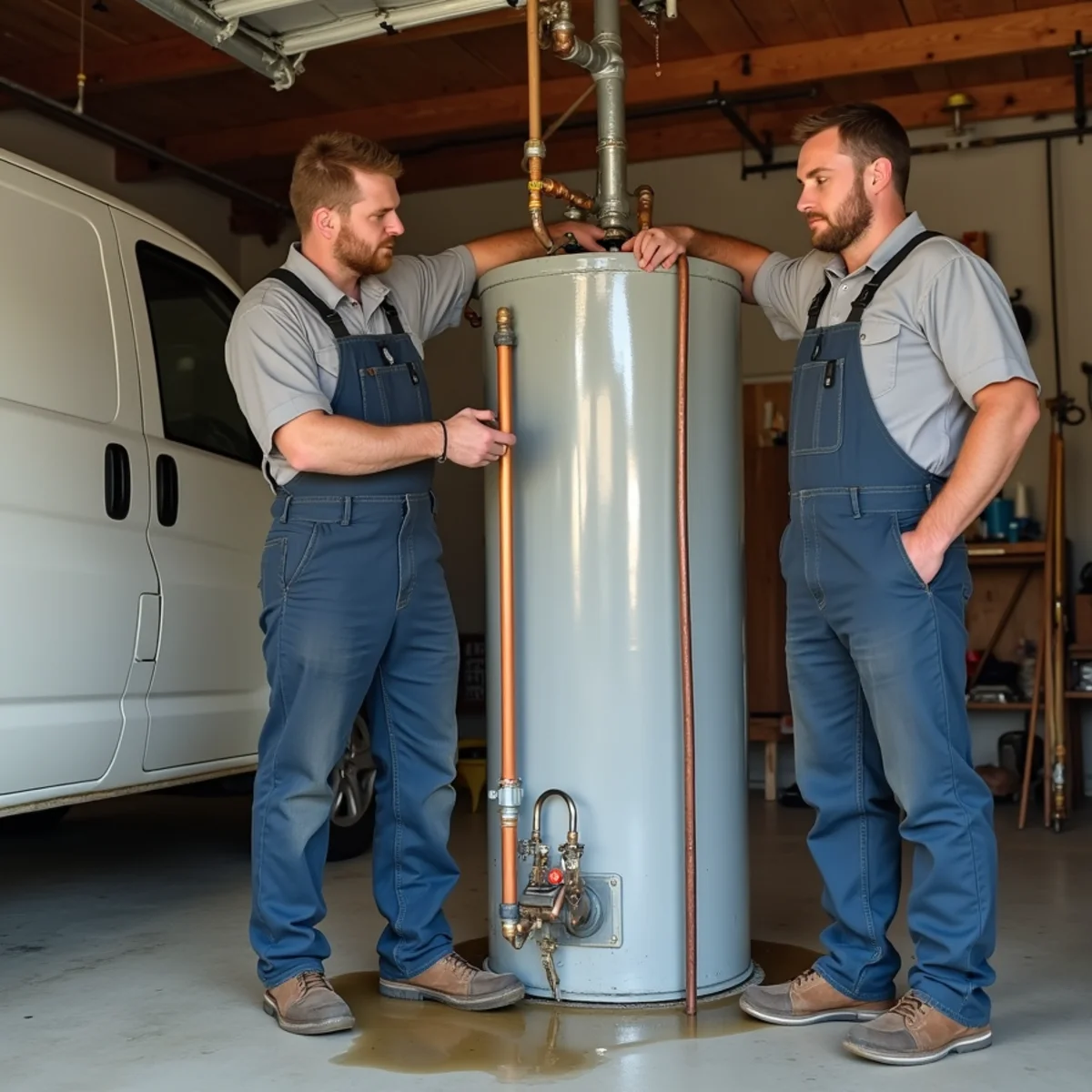
The code requires new and replacement water heaters in California to be braced, anchored, or strapped to resist falling or horizontal displacement during an earthquake. In practice, this typically means metal strapping secured to wall studs at two points — generally near the top third and bottom third of the tank — that keeps the unit from tipping or sliding.
The law applies at point of sale and installation: plumbers and retailers selling water heaters in California are generally required to provide compliant strapping or verify it will be installed as part of the transaction. It's also commonly checked during real estate transactions and by local building inspectors.
Exact bracket style, strap material, and mounting method can vary by manufacturer recommendation and local building department requirements, so it's worth confirming specifics with a licensed plumber or your local jurisdiction rather than assuming a generic strap kit meets code in every case.
Why an unstrapped heater is a water damage problem, not just a safety one
A 40- or 50-gallon water heater is heavy, and it's connected to both the home's water supply and, for gas units, a gas line. If it tips or shifts significantly during shaking, the rigid supply and drain connections can crack, bend, or shear off entirely — turning a structural hazard into an active water leak within seconds.
Because a water heater is usually installed in a garage, closet, or utility space with direct access to flooring, drywall, and often stored belongings, a torn connection can release dozens of gallons quickly and with no one home to catch it early. That's a very different scenario from a slow drip — it's closer to the sudden water loss covered under water heater leak cleanup.
Even without a major earthquake, everyday building settling and minor tremors — common enough across Southern California — can loosen an inadequately strapped unit over years, eventually leading to the same kind of sudden connection failure the law was designed to prevent.
Signs your water heater strapping may not meet code
- No visible metal strap or bracket at all, especially in older homes that haven't had the heater replaced since before the law's enforcement became standard practice
- Straps that are loose, rusted through, or only anchored at one point instead of two
- Plastic zip ties or non-rated materials used instead of code-rated metal strapping
- A water heater installed on a raised platform or in a tight closet where strapping wasn't properly routed to a stud
- Flexible connectors that show kinks or stress marks, which can indicate the unit has already shifted slightly over time
If you're not sure whether your straps meet current code, ask your plumber to check it during your next routine service call — it's a quick visual inspection that's cheap to fix compared to the cost of a failed connection.
Why this matters even outside earthquake risk
California's building code doesn't distinguish between "quake risk" and "general stability risk" for water heater installation — the strapping requirement is a baseline safety standard regardless of how likely a major quake is in any given year. A properly strapped heater is also simply a more stable, longer-lasting installation, less prone to connection stress from routine vibration, nearby construction, or minor settling.
For homes across Long Beach and the greater Gateway Cities area, many built in the same postwar boom as Lakewood, water heater age and installation quality vary widely. A property that's had multiple owners may have a heater that was replaced by someone unfamiliar with current code, or strapped adequately at install but never rechecked in the years since.
If a water heater failure causes flooding
- Shut off the water supply to the heater immediately, and shut off gas or electric power to the unit if it's safe to reach the shutoff
- Move anything valuable out of the affected area if water is still actively spreading
- Photograph the damage and the failed connection or strap for insurance purposes before cleanup begins
- Call a restoration company to begin extraction — water heater failures often release a large volume quickly, so fast extraction limits how far it spreads into flooring and walls
- Have a licensed plumber inspect and correct the strapping when the unit is replaced or repaired, so the same failure doesn't repeat
Call for Water Heater Leak Cleanup in Long Beach
A failed connection can release dozens of gallons before anyone notices, and every extra minute adds to the drying job. Our water heater leak cleanup team serves Long Beach and the surrounding Gateway Cities 24/7, typically on-site within about 60 minutes to start extraction. Call Water Damage Lakewood at +1 (201) 277-9344.
Related help from our team
Frequently Asked Questions
Do I need a permit to add strapping to an existing water heater?
Requirements vary by city and specific circumstance — adding strapping to an existing unit is often a minor task that doesn't require a separate permit, but replacing the water heater itself typically does. Check with your local building department or ask your plumber, since they'll know current local requirements.
Does my home insurance care whether my water heater is strapped?
Some insurers may factor water heater installation and maintenance into claims decisions, particularly if a failure appears linked to a known, unaddressed hazard, but this varies by carrier and policy. It's worth asking your insurance company directly rather than assuming either way, and strapping correctly is inexpensive insurance regardless of what any policy says.
Can I install water heater strapping myself?
It's a straightforward task for someone comfortable with basic tools, and strap kits are widely available at hardware stores. That said, code compliance depends on correct stud anchoring and strap placement, so if you're unsure, having a licensed plumber verify or install it ensures it actually meets Health & Safety Code §19211 and any local amendments.