Before Lakewood was a city, it was farmland and dairy pasture sitting on heavy adobe clay. That soil didn't go anywhere when the tract homes went up in the early 1950s. It's still under every slab, and it still behaves the way clay behaves: it swells when it's wet and shrinks when it dries out.
That cycle matters more here than in most cities, because Lakewood's roughly 17,500 homes are almost all slab-on-grade. There's no crawlspace, no raised foundation to absorb the movement. The concrete sits directly on the clay, and the clay moves under it.
We get called out to a lot of Lakewood homes where the first sign of trouble is a wet patch of carpet or a warm spot on the slab, not a visible crack. The crack is underground, in a pipe, and the soil is usually part of the story.
Why adobe clay is different
Adobe clay has a high fraction of fine clay particles that absorb water and expand, sometimes by a noticeable percentage of the soil's volume. When it dries, it contracts and can pull away from whatever it was pressed against.
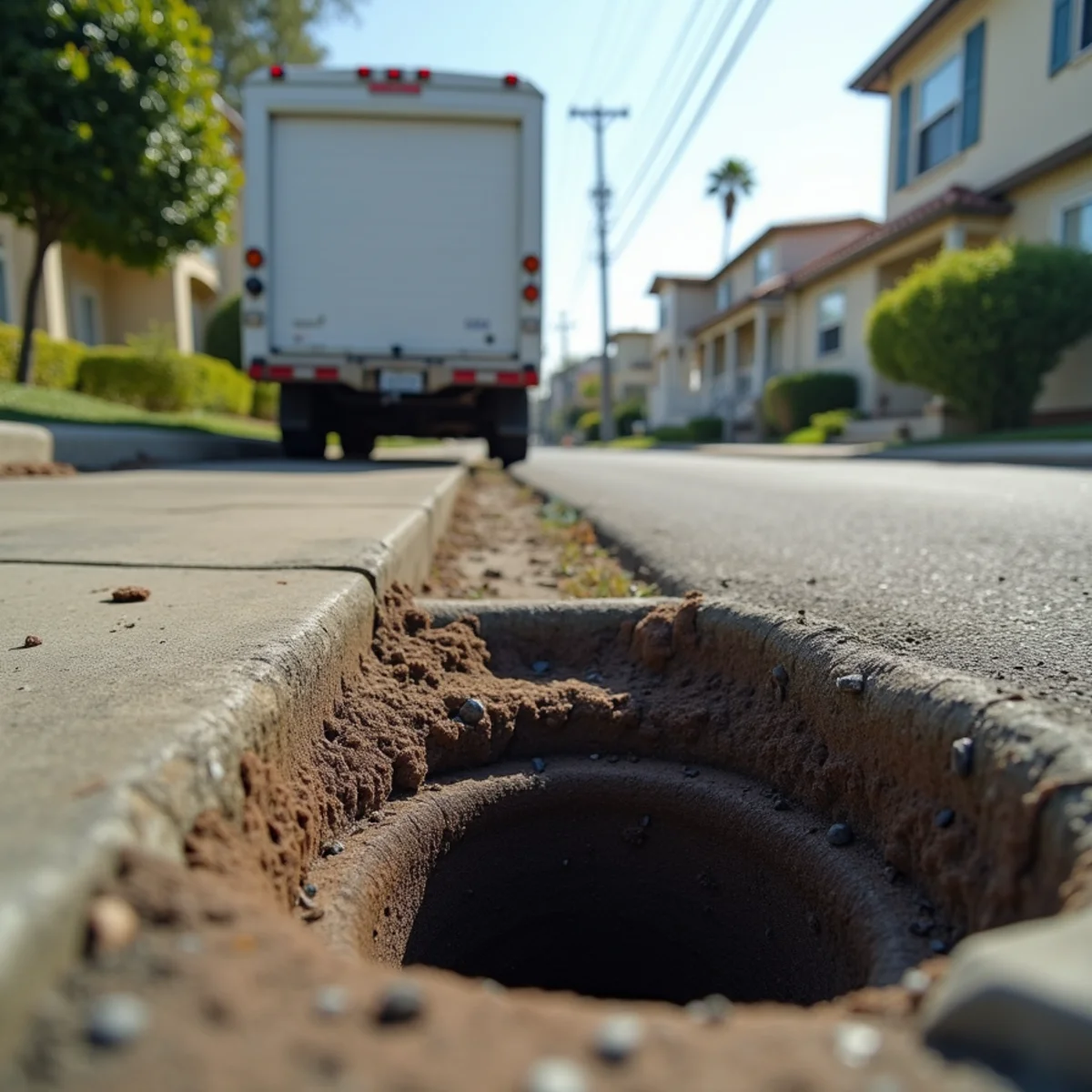
Early Lakewood residents and old accounts of the area describe this cycle directly, noting how the ground would swell after rain and crack open in dry months, sometimes wide enough to see. That's not a new problem introduced by drought. It's the baseline behavior of the soil this entire city sits on.
A slab poured over that soil in 1950–1953 has been through roughly 75 years of expansion and contraction cycles. Each cycle flexes the concrete slightly. Concrete doesn't flex well. Over decades, that repeated stress is enough to open hairline cracks, and hairline cracks widen.
How soil movement turns into a slab leak
The supply pipes running under Lakewood's original tract homes are galvanized steel, installed when the houses were built at a pace of roughly 75 houses a day under developers Weingart, Taper, and Boyar. Those pipes are now 70-plus years old, and galvanized steel corrodes from the inside out over that kind of timeline regardless of soil.
Soil movement adds a second stress on top of corrosion. When clay shifts under a slab, it doesn't just crack the concrete — it can shift the pipe embedded in or under it, putting bending or shearing stress on a joint that's already thinned by rust. A pipe that might have held another five years under stable soil can fail early under a section that's expanding and contracting every winter.
The result is a slab leak: a water line breaks under the concrete floor and water tracks sideways along the slab, sometimes for weeks, before it surfaces as a warm spot, a damp baseboard, or a spike on the water bill. If your service line is called out on our slab leak page, this soil-and-age combination is exactly why Lakewood shows up so often in that category of call.
What homeowners in tract neighborhoods like Lakewood Manor should watch for
- A section of flooring that's warmer than the rest, especially over a slab with no other heat source nearby
- A hissing or trickling sound near the floor when all fixtures are off
- A water meter that keeps spinning after every faucet and appliance in the house is shut off
- New hairline cracks in the slab, drywall, or exterior stucco that weren't there last year
- A water bill that's climbed without a clear reason like a new appliance or extra guests
Run the meter test seasonally, not just once. Because clay soil moves with the seasons, a slab that tested fine in summer can develop stress cracks after the first heavy winter rain.
Why this is a slower, quieter kind of damage
A burst supply line above ground is loud and obvious. A slab leak caused by soil-stressed pipe is the opposite. Water moves under the concrete before it ever reaches a spot where you can see it, and by the time carpet is visibly wet, the leak has often been running for days or weeks.
That delay is why mold becomes part of the conversation almost immediately. Mold can begin colonizing damp material within 24 to 48 hours of sustained moisture exposure. A slab leak that's been quietly wicking moisture into a wall cavity for two weeks has already given mold well past that window.
This is also why we don't treat a slab leak as a plumbing-only problem. Locating and repairing the pipe stops the water. Drying the slab, the wall cavities, and any affected flooring is a separate job that has to happen fast once the leak is found, and it's the part that determines whether you're dealing with a repair or a mold remediation on top of it.
What we actually do for a soil-related slab leak
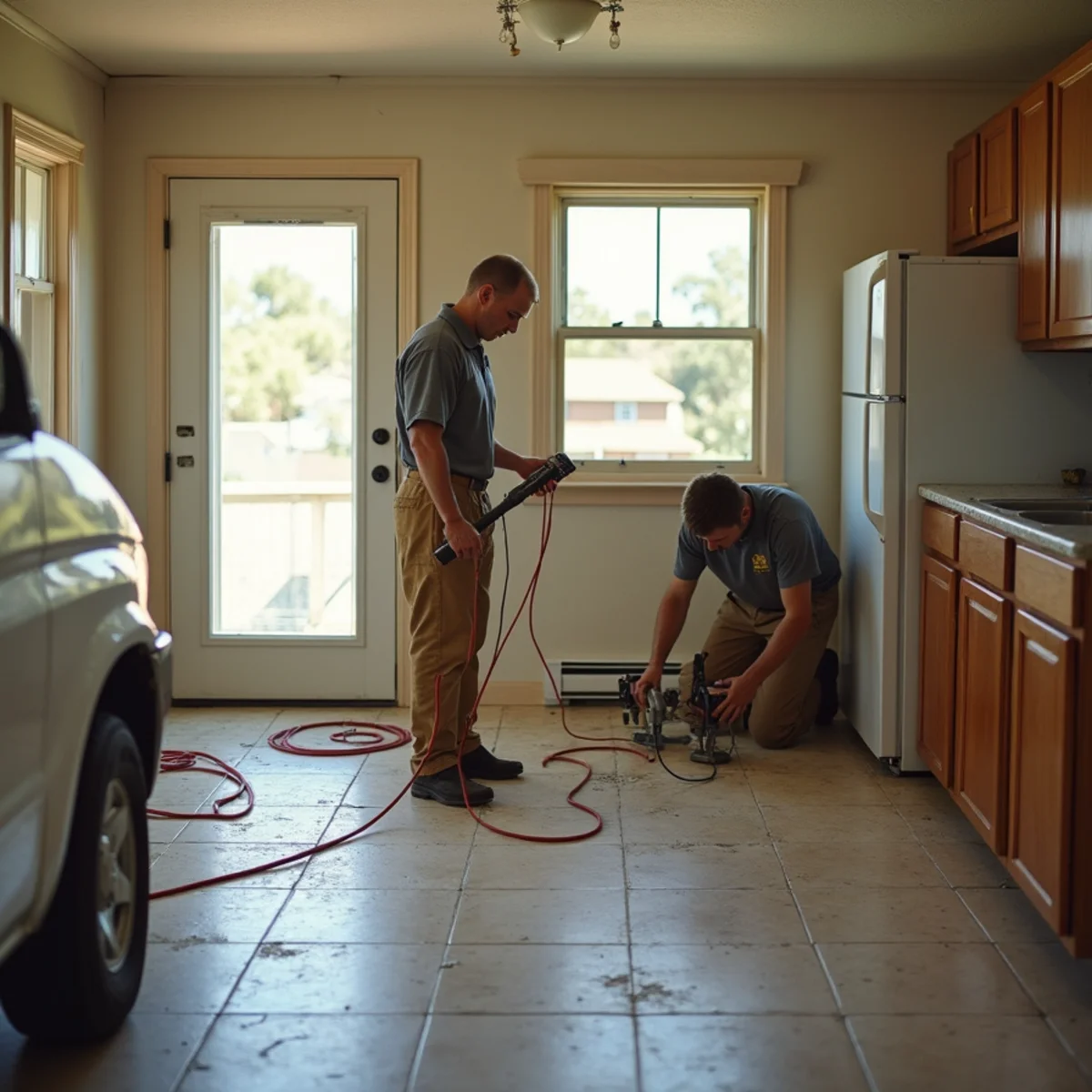
- Confirm there's an active leak and rule out other causes (irrigation, a neighboring unit, condensation) using moisture meters and thermal imaging
- Pinpoint the leak location under the slab using acoustic or electronic leak-detection equipment, so the concrete cutout is targeted instead of exploratory
- Coordinate the plumbing repair or re-route, since fixing the leak itself is a plumbing task that has to happen before drying can be effective
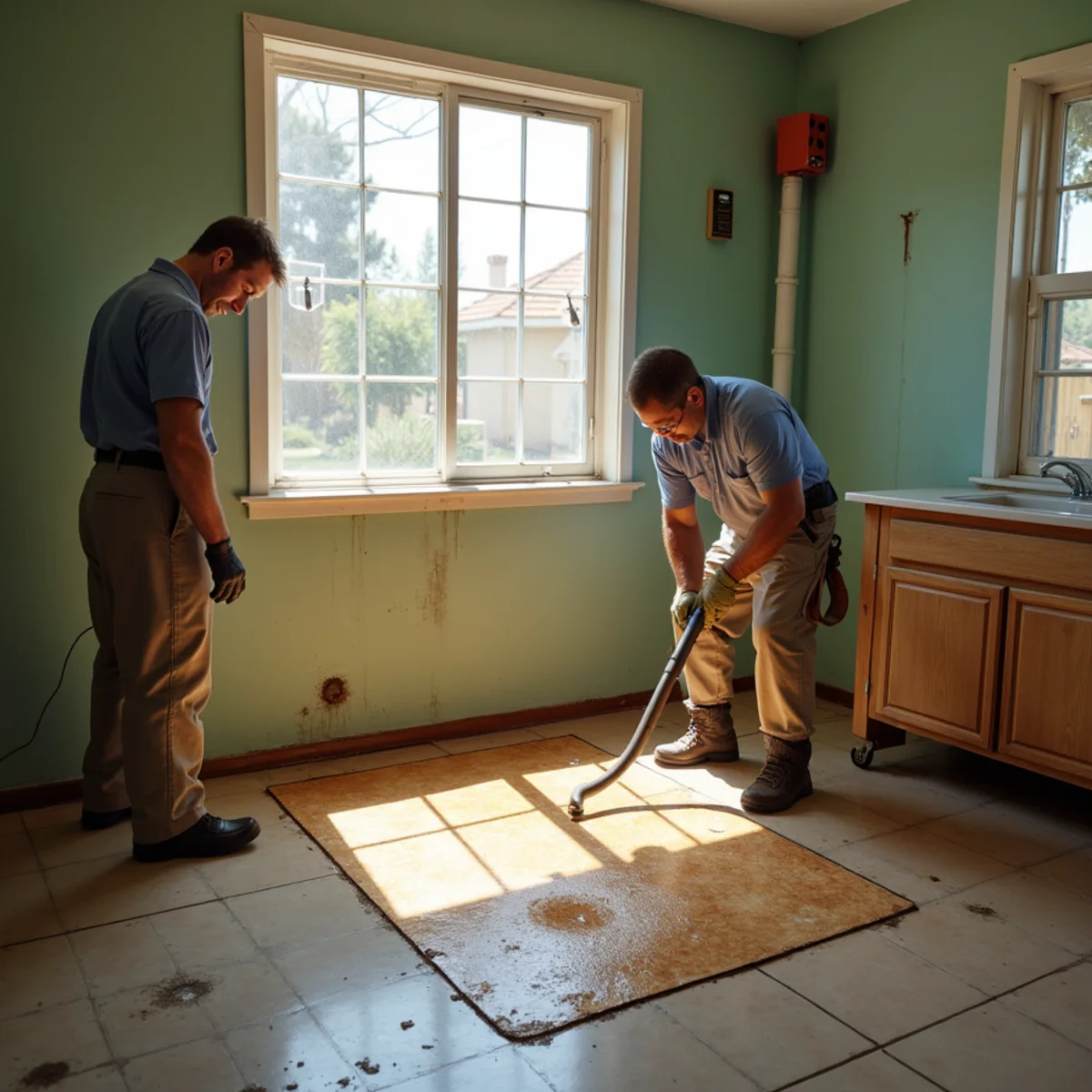
- Extract standing water and begin structural drying of the slab, subfloor, baseboards, and any wall cavities that took on moisture
- Monitor moisture readings over several days until the slab and framing are back to a dry baseline, not just "dry to the touch"
Call as Soon as You Suspect a Slab Leak
Adobe clay soil isn't going to stop moving, and a slab leak doesn't get better on its own — every day it runs adds to both the water bill and the area that ends up needing drying. Our slab leak water damage team serves Lakewood Manor and the rest of the original tract 24/7, with leak-detection equipment on the truck and on-site arrival typically within about 60 minutes. Call Water Damage Lakewood at +1 (201) 277-9344.
Related help from our team
Frequently Asked Questions
Can I tell if my slab leak is soil-related just from the symptoms?
Not with certainty — the symptoms of a slab leak (warm floor spot, rising water bill, sound of running water) look the same whether the cause is corrosion, soil stress, or both. What points toward soil involvement is context: a home in one of Lakewood's original 1950–1953 tracts, recent heavy rain followed by dry weather, or nearby cracking in the slab or exterior concrete. A technician using leak-detection equipment can usually tell you more once they've located the actual break.
Will fixing the pipe stop the soil from moving again?
No. Clay soil will keep expanding and contracting with the seasons regardless of what plumbing repair is done. A pipe repair fixes the immediate leak; it doesn't change the soil's behavior. Some homeowners address this longer-term with re-routing pipe away from the most reactive soil zones or with periodic slab inspections — that's a conversation for a licensed plumber or foundation specialist, and it's worth having if you've had more than one slab leak.
Does homeowners insurance cover a slab leak caused by soil movement?
Most policies cover sudden and accidental water damage from a pipe leak, including the cost to access and repair the leak location, but coverage for soil movement or earth-related damage itself varies by carrier and policy language. Check your own policy or ask your adjuster directly — we can document the damage and moisture readings to support a claim either way.