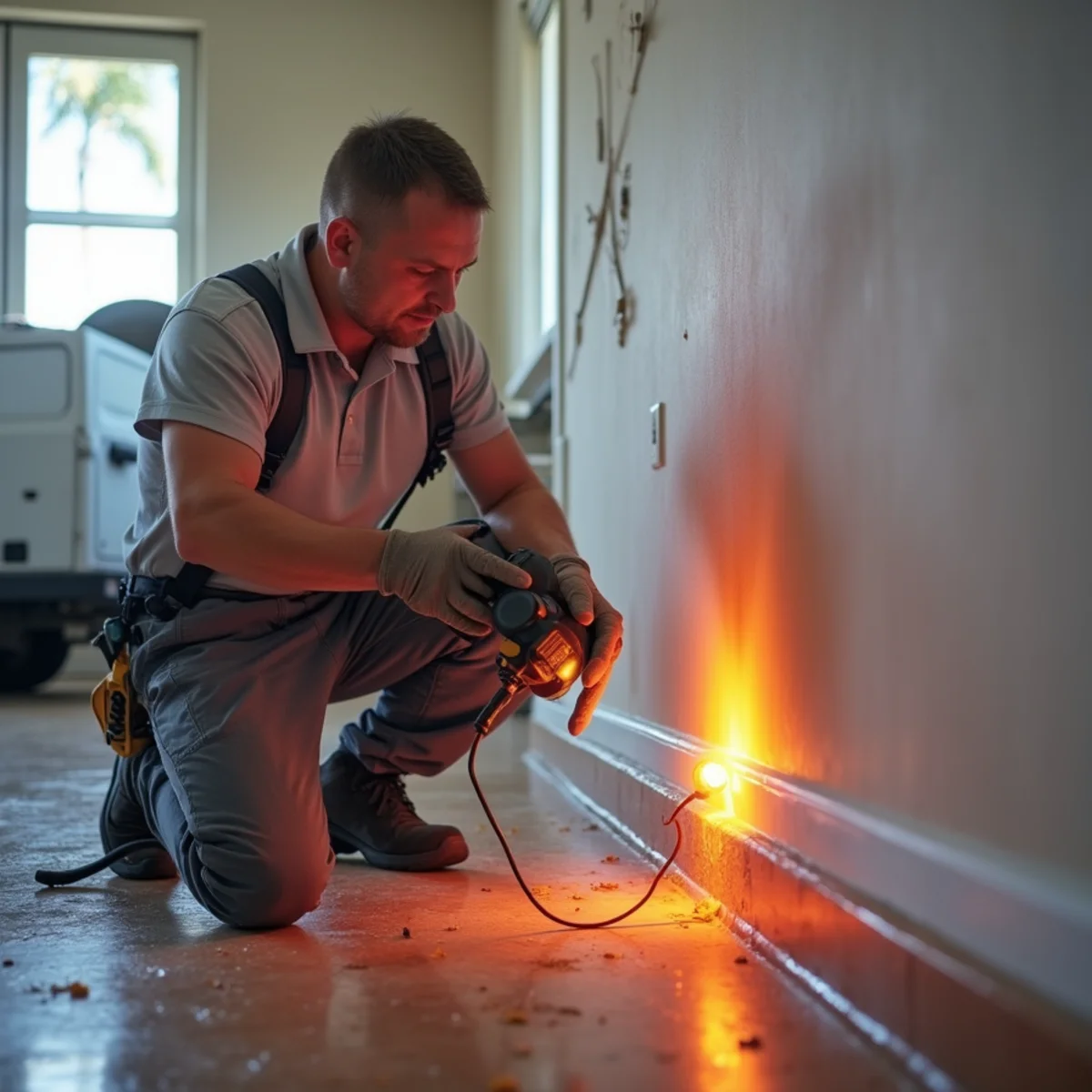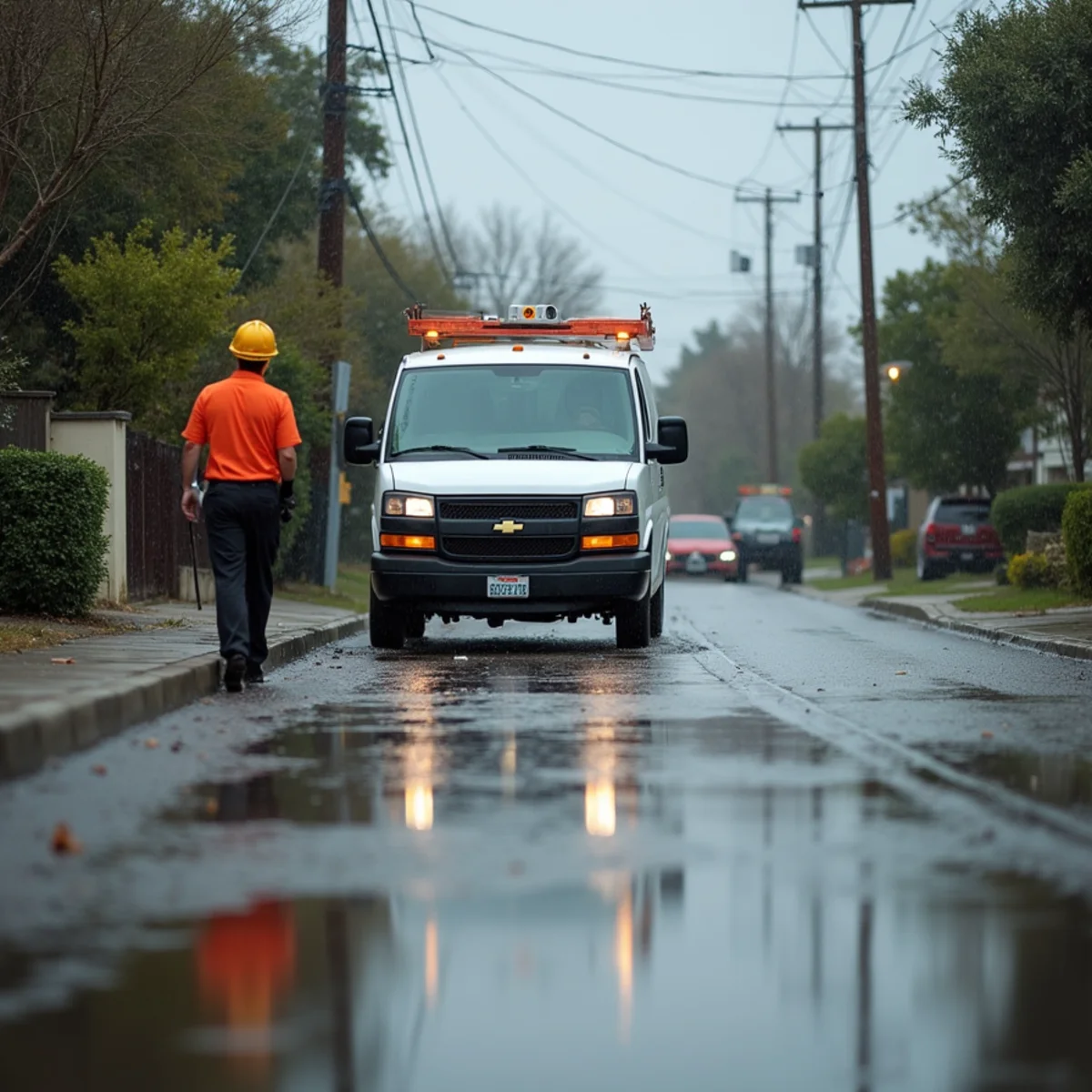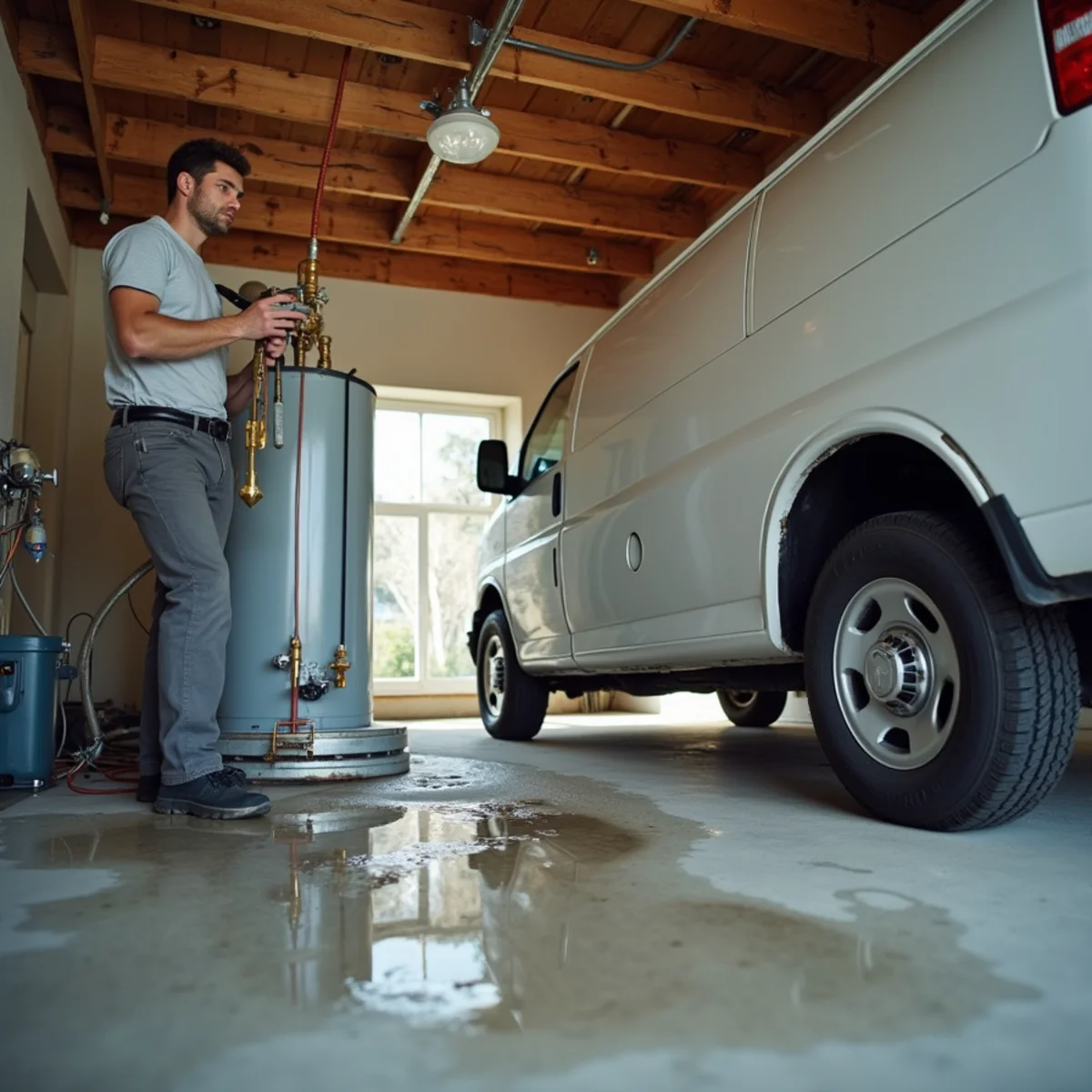

Winter storm season in the Gateway Cities doesn't always look dramatic in the forecast, but a handful of intense rain events can do more damage than an entire mild season if a home isn't ready. Lakewood's flat terrain, aging original infrastructure, and clay soil make basic prep more valuable here than in many other areas.
This checklist is built for the kind of home common across Lakewood and the surrounding Gateway Cities — mostly slab-on-grade tract homes from the 1950s boom, many still running original or aging supply and drainage systems.
None of it requires special tools or a big budget. Most of it is an afternoon's work that meaningfully lowers the odds of a storm turning into a restoration call.
Outside the house: drainage and roofline
- Clear gutters and downspouts of leaves and debris so rainwater actually reaches the ground instead of overflowing behind the fascia
- Confirm downspouts direct water at least several feet away from the foundation, not straight down against the slab edge
- Walk the yard and note any low spots where water tends to pool close to the house
- Check exterior grading — soil that's settled or eroded over the years can slope toward the foundation instead of away from it
- Inspect the roof (or have it inspected) for missing, cracked, or lifted shingles and worn flashing around vents and chimneys
- Clear storm drains near your property of leaves and debris if it's a city-maintained drain you're allowed to clear, or report a blocked one to the city
Doors, windows, and the building envelope
- Check weatherstripping around exterior doors and windows for gaps that let wind-driven rain in
- Inspect caulking around window frames and any exterior penetrations (vents, pipes, cable lines) for cracks or gaps
- Confirm door thresholds seal tightly, especially on doors facing the direction storms typically come from
- Look at garage door seals — garages are a common entry point for wind-driven rain and are often where a water heater sits unprotected
A $10 tube of exterior caulk and twenty minutes of work around window frames is one of the cheapest storm-prep investments available — do it before the first storm, not after a leak shows up.
Plumbing and appliance checks
- Know the location of your main water shut-off valve and confirm it turns — a stuck valve is useless in an emergency
- Check washing machine hoses for cracking, bulging, or brittleness; replace anything more than a few years old
- Verify your water heater is strapped per California code (Health & Safety Code §19211) and that connections aren't showing stress or corrosion
- Test your sump pump if you have one, and confirm it has a working backup power source if the power goes out during a storm
- Run water through slow drains now, before a storm adds volume to a system that's already struggling
Emergency-ready supplies and information
- Keep a battery or hand-crank flashlight and extra batteries somewhere accessible, not buried in a closet
- Save your insurance policy number and agent contact somewhere accessible outside of just your phone, in case power or signal is disrupted
- Keep a few towels, a wet-dry vacuum if you own one, and plastic sheeting on hand for a fast initial response to a leak
- Store important documents (or digital copies) somewhere elevated and protected from water, not in a garage cabinet a few inches off the floor
- Save the number for a 24/7 restoration company in your phone before you need it, not while water is already spreading
Why this matters more in Lakewood specifically
Lakewood's original tract homes sit on slab-on-grade construction with minimal buffer between exterior grade and interior flooring. That makes yard drainage and grading checks more consequential here than in homes with a raised foundation and crawlspace.
The same adobe clay soil that expands and cracks slabs also drains slowly, meaning water has fewer places to go once gutters and storm drains are overwhelmed. And with roughly 10 atmospheric river events hitting the region in a three-week span during the 2022–2023 winter as a recent example, concentrated multi-storm stretches are a realistic scenario to prepare for, not a rare edge case.
None of this prep guarantees a storm-free winter. It does meaningfully reduce how much water gets in, and how far it travels, if a storm does find a weak point.
Call If a Storm Gets Past Your Prep
Even a well-prepared home can take on water during an unusually intense storm. Our storm damage cleanup team serves Carson Park-Briarcrest and the rest of Lakewood 24/7, typically on-site within about 60 minutes to start extraction and drying. Call Water Damage Lakewood at +1 (201) 277-9344.
Related help from our team
Frequently Asked Questions
How often should I actually do this full checklist?
Once before the start of each rainy season is the minimum — typically in the fall before the first significant storms. Gutters and drainage checks are worth repeating mid-season if you get an unusually leafy fall or an early storm dumps debris into your system.
What if I find a problem I can't fix myself, like a cracked roof flashing?
Prioritize it based on how directly it threatens water intrusion. A cracked roof flashing or a stuck main shut-off valve should get a licensed contractor or plumber's attention before the next storm, not after it. Cosmetic issues can usually wait; anything that's a direct water path into the home shouldn't.
Is it worth getting a professional inspection instead of doing this myself?
A DIY walkthrough using this checklist catches the majority of common issues and costs nothing but time. A professional inspection (roofer, plumber, or general contractor) adds value if you're unsure how to assess something like flashing condition or slab-level drainage, or if your home hasn't had any storm-readiness check in several years.