Almost every water damage claim we handle traces back to a component that had a known, predictable service life — a hose, a valve, a tank — that simply ran past it. None of these failures are surprising in hindsight. They're the kind of thing a basic replacement schedule prevents.
This isn't about replacing things that are working fine out of anxiety. It's about knowing which components have a realistic lifespan, watching for the signs that they're approaching the end of it, and replacing on your own schedule instead of theirs.
Below is a practical rundown for the components most likely to cause sudden, serious water loss when they fail.
Washing machine hoses
Standard rubber washing machine hoses have a realistic service life of roughly 3 to 5 years, and they're one of the most common sources of sudden, high-volume residential water loss because they're under constant pressure and often go unnoticed behind or under the machine.
Braided stainless steel hoses are a meaningful upgrade — they're more resistant to bulging and rupture and generally last longer, though they're not indestructible either. Either type should be inspected periodically for cracking, bulging, or brittleness regardless of age.
A practical rule: if you don't know how old your current hoses are, replace them now. They're inexpensive relative to the water damage a burst hose causes, especially since washing machines are often installed in areas without a floor drain to catch an overflow.
Water heaters
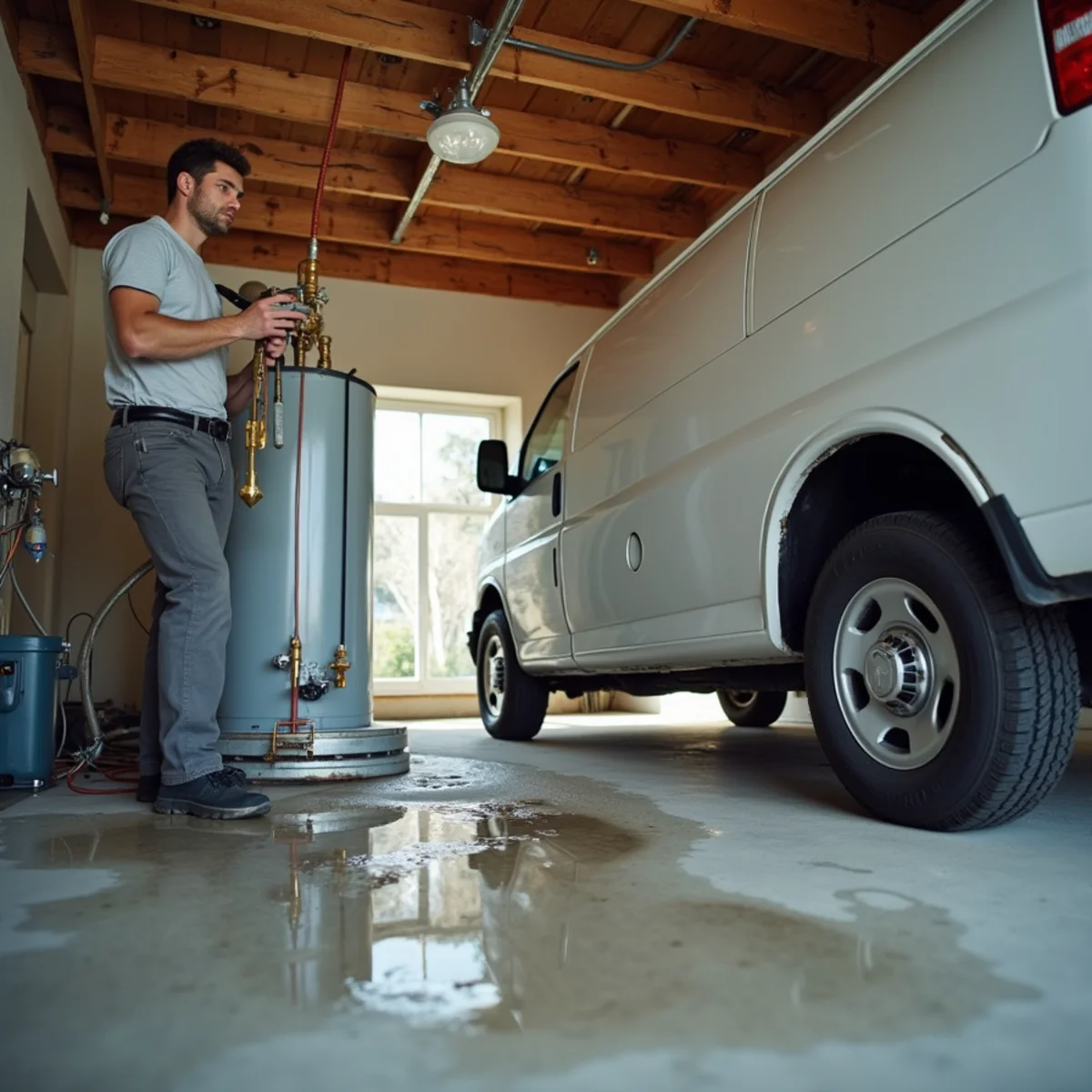
Tank-style water heaters typically last 8 to 12 years, depending on water quality, maintenance, and installation conditions. Past that range, the tank itself becomes more prone to corrosion-related failure, which can mean anything from a slow leak to a sudden tank rupture releasing dozens of gallons at once.
Signs a water heater is nearing the end of its service life include rust-colored water, popping or rumbling sounds during heating (often from sediment buildup), rust around the tank base or fittings, and inconsistent water temperature. Any one of these is worth a professional inspection rather than waiting for a full failure.
Beyond age, confirm the unit is properly braced per California's water heater strapping requirement under Health & Safety Code §19211 — a heater that shifts during an earthquake or minor tremor can tear its own connections loose regardless of the tank's remaining lifespan.
Supply line connectors (under sinks and toilets)
Braided supply lines connecting shutoff valves to faucets and toilets generally last 5 to 10 years, though cheaper plastic-core versions can fail sooner. These are a common source of slow, hidden leaks because they're tucked inside cabinets where dampness can go unnoticed for a while.
Check them during your regular household maintenance for any fraying in the braided sheathing, corrosion at the fitting, or dampness at the connection point. If a supply line looks original to a home built decades ago, it's very likely past a reasonable replacement point.
Quick-reference replacement guide
- Rubber washing machine hoses: replace every 3-5 years, or immediately if cracked or bulging
- Braided stainless steel washing machine hoses: inspect annually, replace at first sign of wear, typically lasts longer than rubber
- Tank water heaters: plan for replacement at 8-12 years; earlier if signs of corrosion or inconsistent heating appear
- Supply line connectors (sinks, toilets): replace every 5-10 years or at first sign of fraying or corrosion
- Dishwasher and refrigerator water lines: inspect annually; replace at any sign of cracking or brittleness
- Galvanized steel main supply pipe (common in homes built in the 1950s): consult a plumber about condition and re-piping options if the home hasn't been re-piped since original construction
Write the installation date on your water heater with a permanent marker when it's installed or replaced. It's a small thing that removes all guesswork about age later.
Why this matters more in older tract neighborhoods
In neighborhoods like Ponderosa and other parts of Lakewood's original 1950–1953 tract, many homes are on their second or third owner and it's not always clear when major plumbing components were last replaced. A water heater or set of supply lines original to a decades-old sale disclosure could easily be well past its practical service life.
Pairing this replacement guide with a basic monthly leak-inspection habit covers both sides of the risk: known-lifespan components get replaced proactively, and anything unexpected gets caught early instead of running for weeks unnoticed.
Call for Water Heater Leak Cleanup in Ponderosa
If a hose, connector, or water heater has already failed and water is on the floor, replacement timing takes a back seat to extraction. Our water heater leak cleanup team serves Ponderosa and the rest of Lakewood 24/7, typically on-site within about 60 minutes. Call Water Damage Lakewood at +1 (201) 277-9344.
Related help from our team
Frequently Asked Questions
Is it really worth replacing hoses that look fine, just because of their age?
For washing machine hoses specifically, yes — they're inexpensive (typically well under the cost of a service call) and failure risk rises meaningfully with age even when a hose looks intact from the outside, since rubber degrades from the inside first. It's one of the highest-value, lowest-cost preventive replacements available.
How do I know how old my water heater actually is?
Check the manufacturer's data plate on the side of the tank — it typically includes a serial number that encodes the manufacture date, though the format varies by brand. If you can't decode it, the manufacturer's customer service line can usually help, or a plumber can identify it during a visit.
What should I do if I find a component that's already failed or leaking?
Shut off the water supply to that fixture or the main shutoff if needed, and address the replacement as soon as reasonably possible. If the leak has already caused visible water damage — wet flooring, damp drywall, water staining — call a restoration company promptly, since the drying window matters more than the replacement timeline at that point.