
A surprising share of the water damage calls we take don't start with a plumbing failure at all. They start with water that couldn't get away from the house fast enough — a clogged gutter overflowing behind the fascia, or a downspout dumping water right against the foundation instead of away from it.
These are also some of the most preventable causes of damage, because they don't require plumbing expertise to check or fix. A ladder, a pair of gloves, and half an hour is usually enough.
This checklist covers the two systems that do the most work keeping water away from your home: gutters and downspouts above ground, and yard grading at ground level.
Gutters: what to check
- Clear leaves, twigs, and granule buildup from gutter troughs — even a partial blockage can cause overflow during a heavy downpour
- Check for sagging sections, which indicate the gutter is pulling away from its brackets and won't drain properly even when clear
- Look for rust spots, cracks, or seams that have separated, which leak water down the side of the house instead of into the downspout
- Confirm gutters are pitched slightly toward the downspout — standing water in a level or reverse-pitched section is a sign it needs adjustment
- Check gutter guards or screens if you have them; they can clog with fine debris even while keeping larger leaves out
Downspouts: what to check
- Make sure each downspout has an extension or splash block directing water at least several feet from the foundation
- Check for disconnected sections or elbows that have popped loose, which dump water straight down at the wall instead of routing it away
- Flush each downspout with a hose to confirm water flows freely through the whole length, not just partway before hitting a clog
- If downspouts connect to underground drain lines, check the visible outlet for blockage or standing water, which can indicate a clog further down the line
A four-to-six-foot downspout extension is one of the cheapest, highest-impact fixes available. If your downspouts currently dump water within a foot or two of the foundation, extending them is worth doing before anything else on this list.
Yard grading and drainage
Ground-level grading around a home should generally slope away from the foundation, so rainwater moves away from the house rather than pooling against it. Over decades, soil can settle, erode, or get disturbed by landscaping work in ways that quietly flatten or reverse that slope without anyone noticing.
This matters more for slab-on-grade homes, common throughout Lakewood's original tract neighborhoods including areas like Lakewood Country Club Estates, because there's minimal buffer between exterior grade and the interior floor level. Water that pools against a slab-on-grade foundation has a much shorter path inside than it would with a raised foundation.
Adobe clay soil, which underlies much of the area, drains slowly to begin with. That makes correct grading and functioning gutters more important here than in areas with sandier, faster-draining soil — there's less natural margin for error.
A simple way to check your own grading
- Walk the perimeter of your house after a light-to-moderate rain (not a major storm) and note anywhere water is pooling against the foundation
- Look for soil that's visibly lower right next to the foundation than a few feet away — a sign the slope has reversed or flattened over time
- Check mulch or landscaping beds close to the house; built-up material can sometimes create an unintended dam that traps water against the wall
- Note any spots where downspout discharge and yard slope interact badly — for example, a downspout extension pointing toward a low spot instead of away from it
- If you find a problem area, regrading with additional soil sloping away from the foundation is often a manageable DIY fix; larger grading issues may need a landscaper or drainage contractor
When gutter or grading issues turn into a restoration call
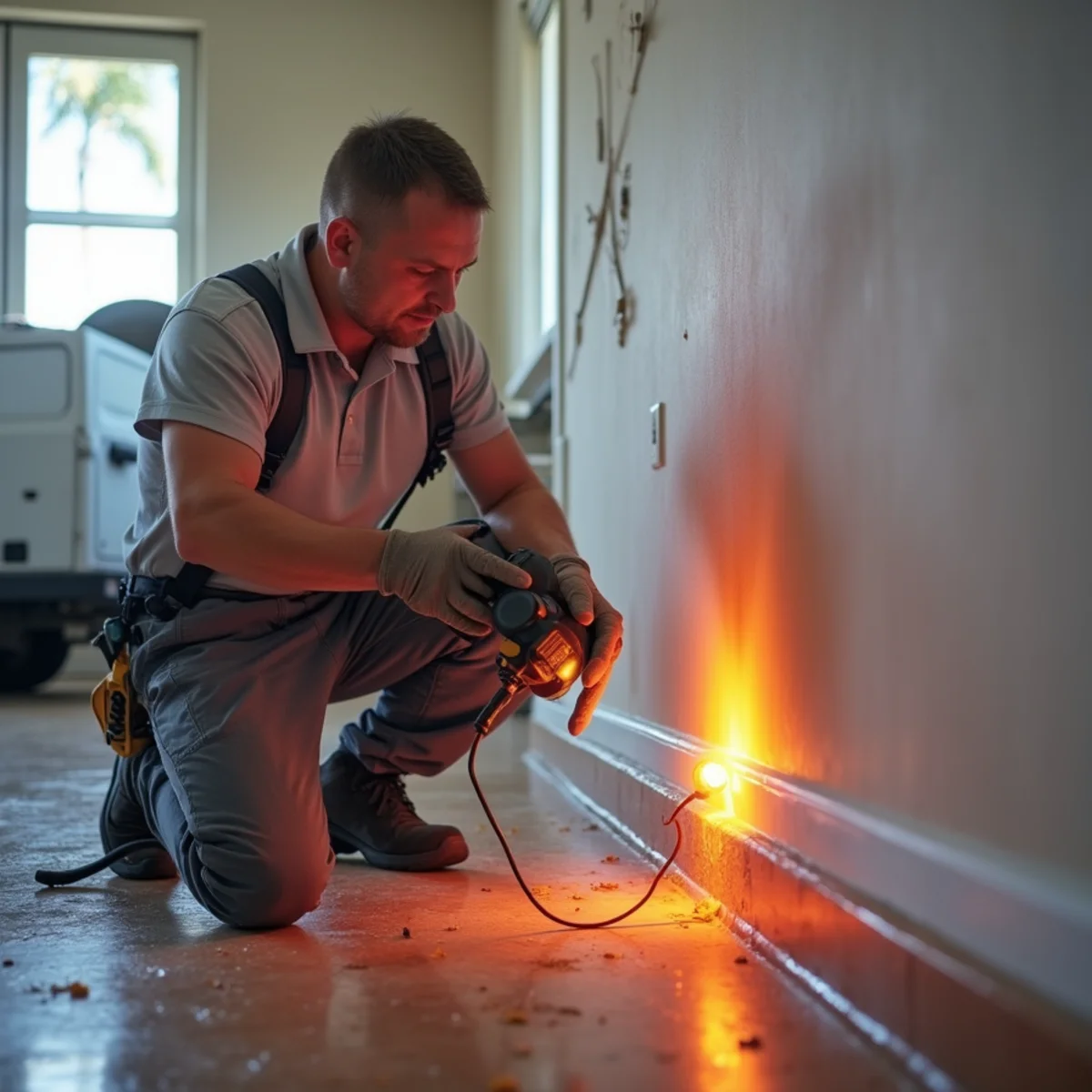
If water does get past clogged gutters or poor grading and reaches your home's interior, treat it seriously even if the volume seems small. Water intrusion at the base of a wall can travel up into drywall and insulation well beyond what's visible at floor level, and mold can begin developing within 24 to 48 hours of sustained dampness.
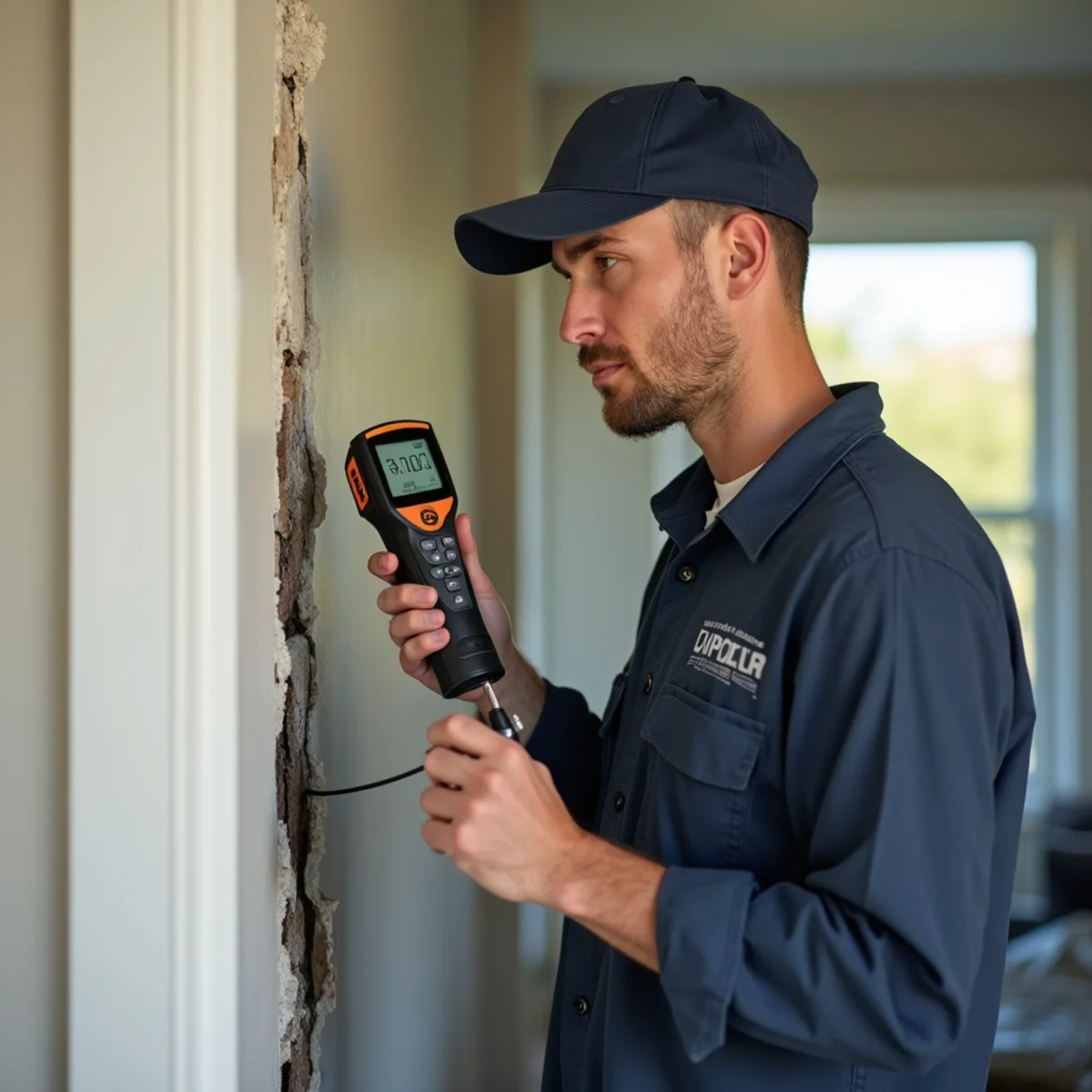
A quick moisture check with a meter is far more reliable than a visual inspection alone for confirming how far water has traveled behind a wall. If you've had repeated minor water intrusion in the same spot after storms, it's worth having that checked properly rather than mopping it up and hoping the next storm is lighter.
Call for Storm Damage Cleanup in Lakewood Country Club Estates
If gutters or grading have already let water into your home, don't wait to see if it dries on its own. Our storm damage cleanup team serves Lakewood Country Club Estates and the rest of Lakewood 24/7, typically on-site within about 60 minutes to check moisture and start drying. Call Water Damage Lakewood at +1 (201) 277-9344.
Related help from our team
Frequently Asked Questions
How often should gutters actually be cleaned?
Twice a year is a reasonable baseline for most homes — once in fall before the rainy season and once in spring to clear out anything that accumulated over winter. Homes near a lot of trees may need more frequent cleaning, especially during heavy leaf-drop periods.
Can I fix bad yard grading myself?
Minor grading issues — a low spot near the foundation, soil that's settled a few inches — are often manageable with additional topsoil sloped correctly away from the house. More significant grading problems, especially ones involving large sections of yard or drainage that affects a neighboring property, are usually better handled by a landscaper or drainage contractor who can assess the full picture.
What's the connection between gutters and foundation water damage?
A functioning gutter and downspout system is one of the primary ways rainwater is kept away from a home's foundation. When gutters overflow or downspouts discharge too close to the house, that water concentrates right at the foundation instead of spreading out across the yard — which is exactly the scenario that leads to water finding its way into a slab-on-grade home.