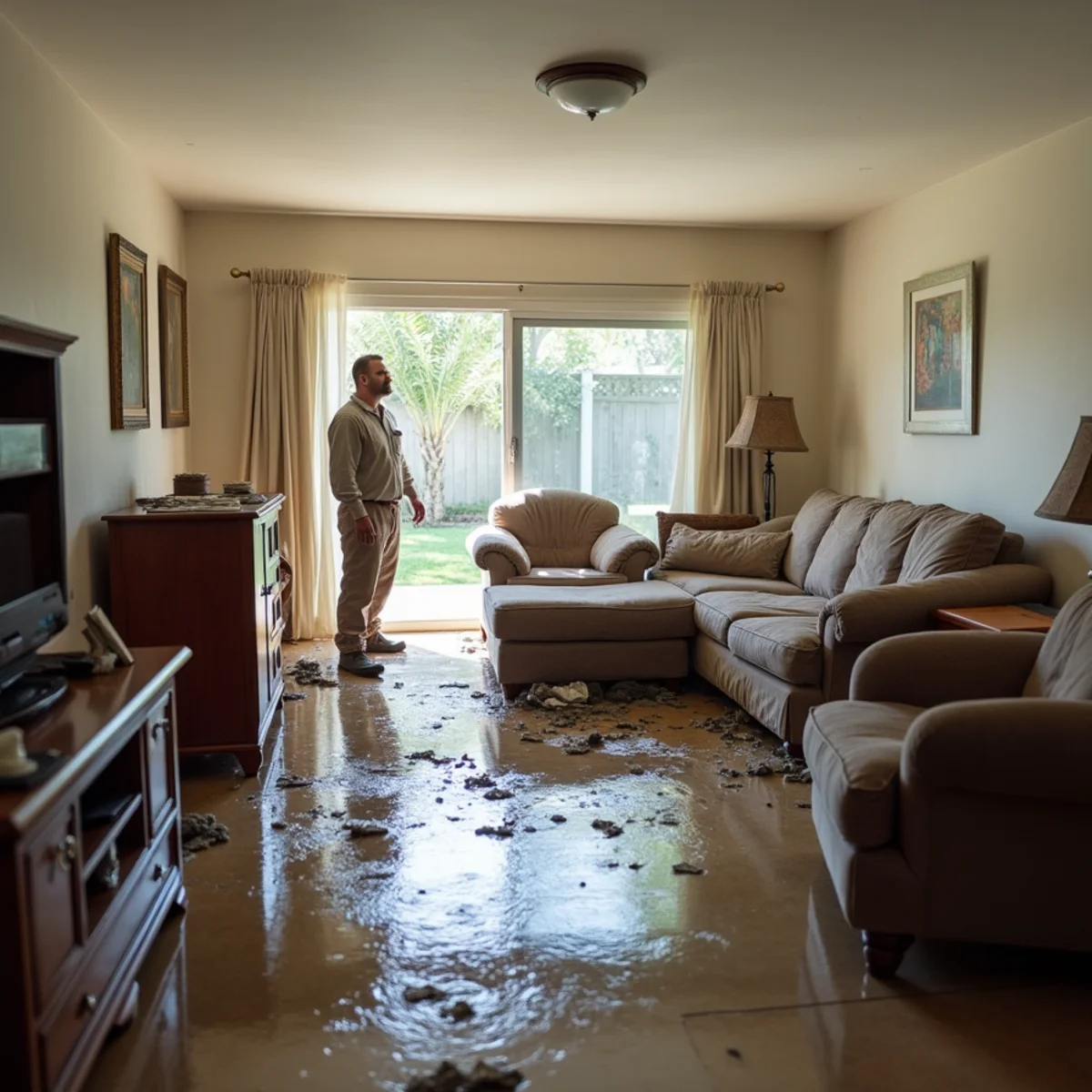
The restoration industry sorts water damage into three categories, and the difference between them isn't a technicality — it changes what has to be thrown away, what protective equipment gets used, and how much the cleanup costs.
If you're dealing with a water loss in Bellflower, here's what Category 1, 2, and 3 actually mean, and why the source of the water matters as much as how much of it there is.
Category 1: Clean Water
Category 1 water comes from a clean source — a supply line, a water heater, or an overflowing sink with no contaminants involved. It poses the least health risk and gives materials like carpet and drywall the best chance of being dried and saved.
The catch is that Category 1 water doesn't stay clean forever. If it sits for more than 24 to 48 hours or contacts contaminated surfaces, it can degrade into Category 2.
Category 2: Gray Water
Category 2, or gray water, contains a measurable level of contamination — think dishwasher or washing machine discharge, or a toilet overflow with urine but no solid waste. It can cause discomfort or illness if you're exposed to it directly.
Gray water cleanup typically requires removing more porous materials than a Category 1 loss, since contamination makes drying-and-saving a less reliable option.
Category 3: Black Water
Category 3 water is grossly contaminated — sewage backups, floodwater from outside the home, and any water containing solid waste fall into this category. It carries real health risks from bacteria, viruses, and other pathogens.
Cleanup requires full personal protective equipment, removal of most porous materials that were contacted, and disinfection of everything that stays.
Water can change category while it sits. Clean water from a burst pipe that isn't addressed for a few days can pick up contamination from carpet, dust, and building materials and effectively become Category 2.
Why the Category Changes the Whole Plan
- What can be dried and saved versus what has to be discarded
- What protective equipment technicians need to use
- Whether antimicrobial treatment and disinfection are required
- How the loss is documented for insurance purposes
- How quickly the job needs to move to limit health risk and cost
How We Assess the Category on Arrival
- Identify the water's source before touching anything
- Test for visible or likely contamination based on that source
- Confirm how long the water has been present
- Select PPE and equipment appropriate to the category
- Document findings for the insurance claim
When to Call
Our flood cleanup and sewage cleanup teams are equipped to handle any category, from a clean supply-line leak to a full sewage backup. We're on site within about 60 minutes across Bellflower, 24 hours a day.
Call +1 (201) 277-9344 and we'll assess the category on arrival and explain exactly what it means for your cleanup.
A Clean-Water Leak Won't Stay Clean
The category you start with is not the one you keep. Clean supply-line water is Category 1 in the first hour. Let it sit in warm drywall, carpet pad, and baseboard, and bacteria feed and multiply. By the next day that same water often tests as Category 2, gray water. Given more time and mild indoor temperatures, it can reach Category 3.
This is why timing drives the whole response, not just the source. Call fast and we can usually extract, dry, and save materials in place. Wait a few days and the same spill may force us to cut out drywall, pad, and trim that could have been kept. The water never changed where it came from. It changed what it became.
- Time: every hour standing water sits, its category can climb
- Temperature: Lakewood's mild indoor air speeds bacterial growth
- Contact with organics: drywall paper, wood, and pad feed contamination
- Contamination on arrival: sewage or ground water starts at Category 3
- The fix: fast extraction can hold water at Category 1 and save materials
Related help from our team
Frequently Asked Questions
What's the difference between Category 1, 2, and 3 water damage?
Category 1 is clean water from a source like a supply line. Category 2, gray water, carries some contamination. Category 3, black water, is grossly contaminated — sewage or outside floodwater — and carries the highest health risk.
Can Category 1 water turn into Category 2 or 3?
Yes. If clean water sits for more than about 24 to 48 hours, or contacts contaminated surfaces or materials, it can degrade into a higher category, which is part of why fast response matters.
Does the water category affect insurance coverage?
It can affect what's covered and how, since some policies distinguish between sudden accidental discharge and backups or flooding. It also affects the scope and cost of the cleanup, which your insurer will want documented accurately.