
The leaks that do the most damage are often the ones you can't see. A pipe leaking slowly under a slab or inside a wall doesn't announce itself with a puddle — it shows up in smaller, easier-to-miss signals first.
If you're in Lakewood Country Club Estates and something feels off — a warm spot on the floor, a water bill that doesn't add up — here's what to check before it turns into a bigger repair.
Warm or Damp Spots on the Floor
A patch of flooring that's noticeably warmer than the rest of the room, especially over a slab foundation, is a classic sign of a hot-water slab leak. The warm water traveling through a broken pipe underneath heats the concrete and, eventually, the floor above it.
A cold or persistently damp spot without an obvious cause can point to the same issue on a cold-water line, just without the temperature clue.
A Water Bill That Doesn't Match Your Usage
If your water bill jumps noticeably without a clear reason — no new appliance, no extra guests, no obvious change in habits — a hidden leak is one of the most common explanations. Even a small, steady leak adds up fast over a billing cycle.
Comparing a few months of bills side by side makes an unexplained jump easier to spot than looking at one bill in isolation.
The Water Meter Test
- Turn off every fixture and appliance that uses water in the house
- Locate your water meter, usually near the street or at the side of the property
- Note the current reading or watch the leak indicator dial
- Wait 30 minutes to an hour without using any water
- Check the meter again — if it's moved, water is flowing somewhere it shouldn't be
Most water meters have a small triangular or star-shaped leak indicator that spins even with very slow flow. If it's moving with everything off, that's a leak, not a coincidence.
Other Signs Worth Paying Attention To
- A hissing or trickling sound near walls or floors, especially when the house is quiet
- Mold or a musty smell in one area without an obvious source
- Cracking or unevenness in flooring, particularly near where a slab meets a wall
- Low water pressure in one fixture while others seem normal
- Baseboards or drywall that stay damp with no visible cause nearby
Why Guessing at the Location Doesn't Work
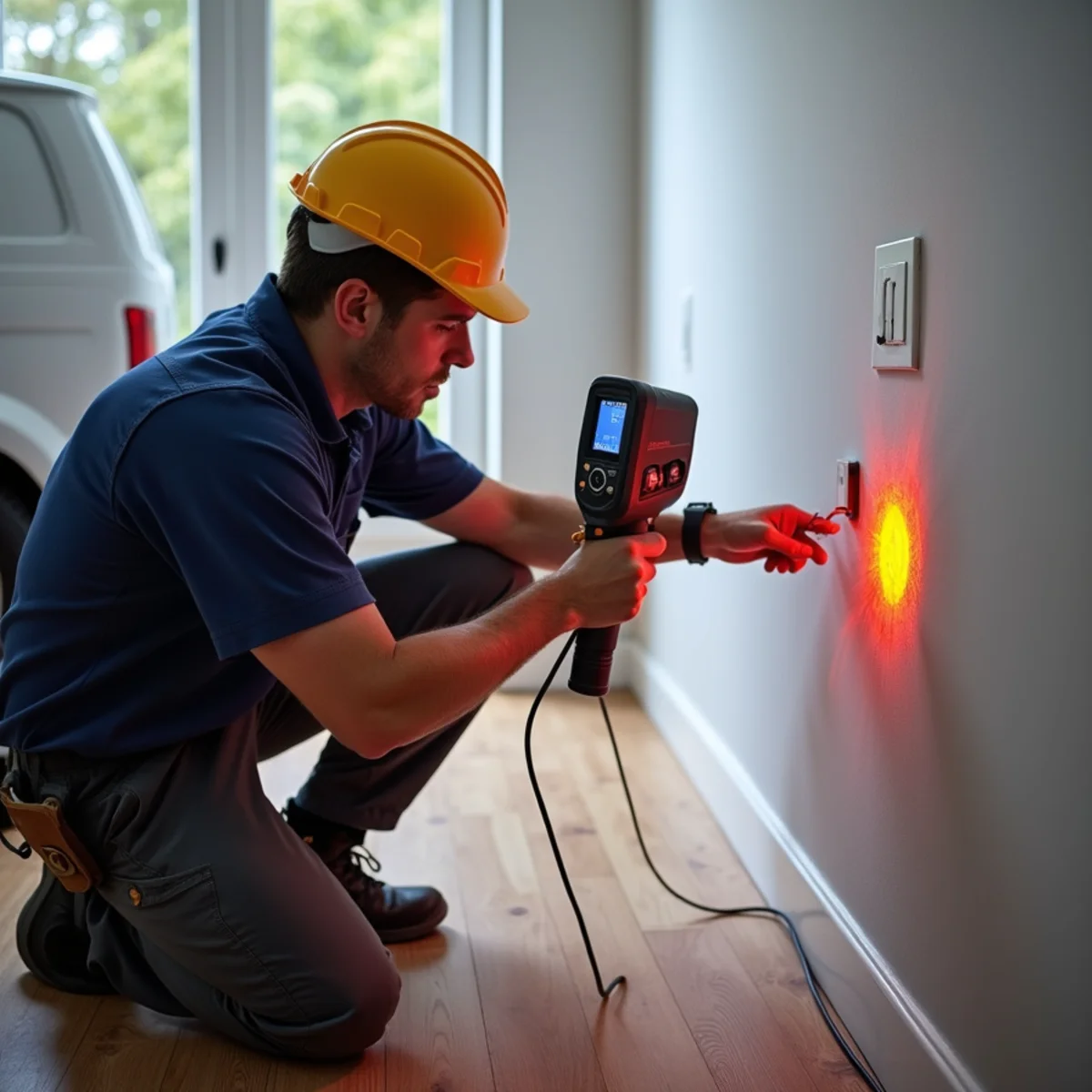
Hidden leaks, especially under a slab, aren't something to chase down by tearing up flooring in different spots and hoping to get lucky. Our leak detection process uses acoustic and thermal equipment to pinpoint the source without unnecessary demolition.
Finding the exact location first means the repair — and any related water damage cleanup — only touches the area that actually needs it.
When to Call
If you're seeing any of these signs in your Lakewood Country Club Estates home, it's worth having it checked before a slow leak becomes a bigger structural or mold problem.
We're on site within about 60 minutes, 24 hours a day. Call +1 (201) 277-9344 and we'll help you find out what's actually going on.
The water-meter test finds leaks the eye can't
You do not need special tools to confirm a hidden leak. Turn off every faucet, appliance, and ice maker. Then walk out to the water meter at the curb and watch the small sweep hand or the leak-indicator triangle. If it moves at all with everything shut off, water is escaping somewhere between the meter and your fixtures.
Your bill is the slower version of the same test. Pull three or four months and look for a creep upward that your usage does not explain. On Lakewood's older galvanized and copper lines, a slab leak often starts as a few gallons an hour, so the meter twitches before any stain ever shows on a wall or floor.
Read the meter, wait two hours with no water use, then read it again — any change means water is moving with nothing turned on.
Related help from our team
Frequently Asked Questions
What are the most common signs of a hidden water leak?
A warm or damp spot on the floor, an unexplained rise in your water bill, a hissing sound near walls, or a water meter that keeps moving when every fixture in the house is off are the most reliable early signs.
How can I check for a leak myself?
Turn off all water use in the house, then watch your water meter for 30 minutes to an hour. If the reading changes, or the leak indicator dial keeps spinning, water is moving somewhere it shouldn't be.
Can a hidden leak cause mold if I don't see standing water?
Yes. A slow leak inside a wall or under flooring can keep materials wet enough for mold to grow within 24 to 48 hours, even without any visible puddle or obvious water damage.