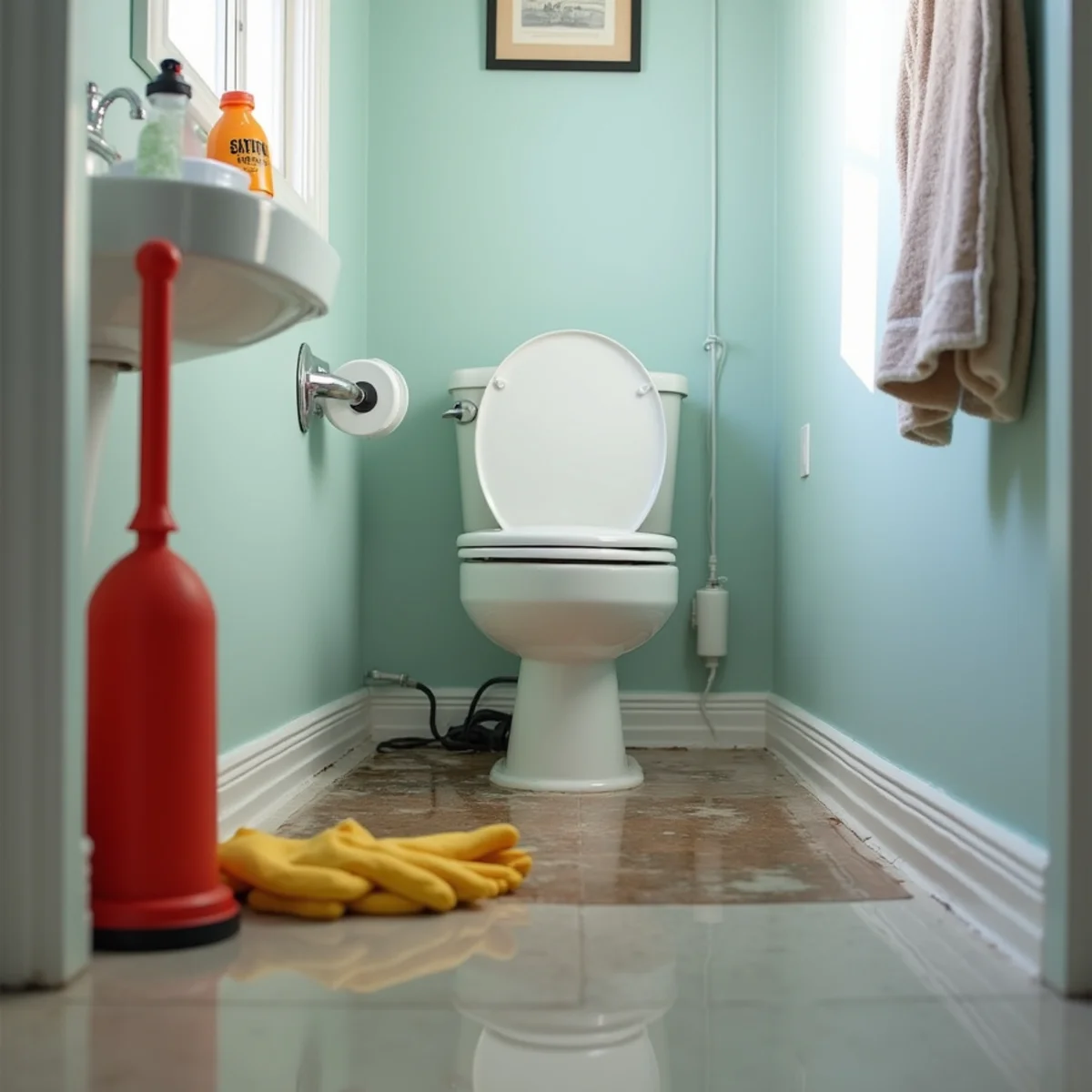
A shower drain is usually the lowest point in a home's plumbing, which means it's often the first place a sewer line problem shows up. When sewage backs up into the shower instead of draining away, the blockage is almost never in the shower itself.
For homeowners in Paramount dealing with this, here's what's usually causing it, why it's more serious than a slow drain, and how to clean it up without making the health risk worse.
Why the Shower, Specifically
Water and waste follow gravity toward the lowest drain connected to the main sewer line. When that main line is partially or fully blocked, everything backs up and looks for the easiest way out — which is often the shower drain, since it sits low and has a wide opening.
That's why a backup showing up in the shower, especially alongside a toilet that won't flush properly, points to a problem in the main line rather than anything local to the bathroom.
Common Causes
- Tree roots that have grown into the main sewer line
- Grease, wipes, or other debris built up in the pipe over time
- A collapsed or offset section of an aging sewer line
- A municipal sewer line backup during heavy rain
- Flushed items — wipes, feminine products, paper towels — that don't break down
Why This Is a Category 3 Health Risk
Water coming up through a shower drain from a sewer backup is Category 3 water, meaning it's grossly contaminated with bacteria, viruses, and waste. It's not something to clean up with household cleaners and a mop.
Direct contact can cause illness, and the contamination spreads further the more it's disturbed without the right protective equipment and containment.
Don't run other water in the house — sinks, washing machine, additional showers — until the blockage is cleared. Adding more water can push the backup further into your home.
What to Do Right Away
- Stop using all drains and toilets in the house immediately
- Keep people and pets away from the affected bathroom
- Don't attempt to plunge a sewage backup — it can push contamination further into the line or back into the home
- Photograph the damage for your insurance claim
- Call a professional for both the plumbing blockage and the contaminated water cleanup
What Our Sewage Cleanup Covers
Our sewage cleanup process handles the contaminated water and materials — extraction, removal of anything porous that was contacted, disinfection, and drying. We also coordinate with a plumber to clear the actual blockage causing the backup, since cleanup without fixing the cause just invites a repeat.
We document the whole process for your insurance claim, since sewer backups often involve a separate coverage question from standard water damage.
When to Call
A sewage backup in the shower isn't something to wait out. We're on site within about 60 minutes across Paramount, 24 hours a day, and we handle the cleanup safely from the first visit.
Call +1 (201) 277-9344 as soon as you notice it — the faster it's addressed, the less of your home is exposed to contaminated water.
Why the Shower Drain Is Trying to Warn You
Sewage coming up through a shower or tub is not a shower problem. It is a main-line problem. Waste water follows gravity to the lowest opening in the house, and in most homes that is the ground-floor shower or tub drain. When the main line downstream is blocked, that low drain is the first place the backup shows.
That also makes it a Category 3 job. What is coming up is black water carrying bacteria, and no plunger clears a blocked main. In Lakewood, aging clay laterals and tree roots are common causes. The safe move is to stop using every fixture, keep people and pets off the wet floor, and get the line cleared and the area properly disinfected.
If the lowest drain in the house backs up when you run another fixture, stop using water entirely and treat it as a contaminated main-line blockage, not a clog.
Related help from our team
Frequently Asked Questions
Why is sewage coming up through my shower drain instead of the toilet?
The shower drain is often the lowest point in the plumbing system, so when the main sewer line is blocked, backed-up sewage tends to surface there first, even if the actual blockage is further down the line.
Is it safe to plunge a sewage backup in the shower?
No. Plunging a sewage backup can push contaminated water further into the line or back into your home, and it doesn't address whatever is actually blocking the main sewer line.
What usually causes a sewage backup into a shower?
Tree roots growing into the sewer line, buildup of grease or debris, a damaged section of pipe, or items flushed that shouldn't be. A plumber can identify the specific cause with a camera inspection.