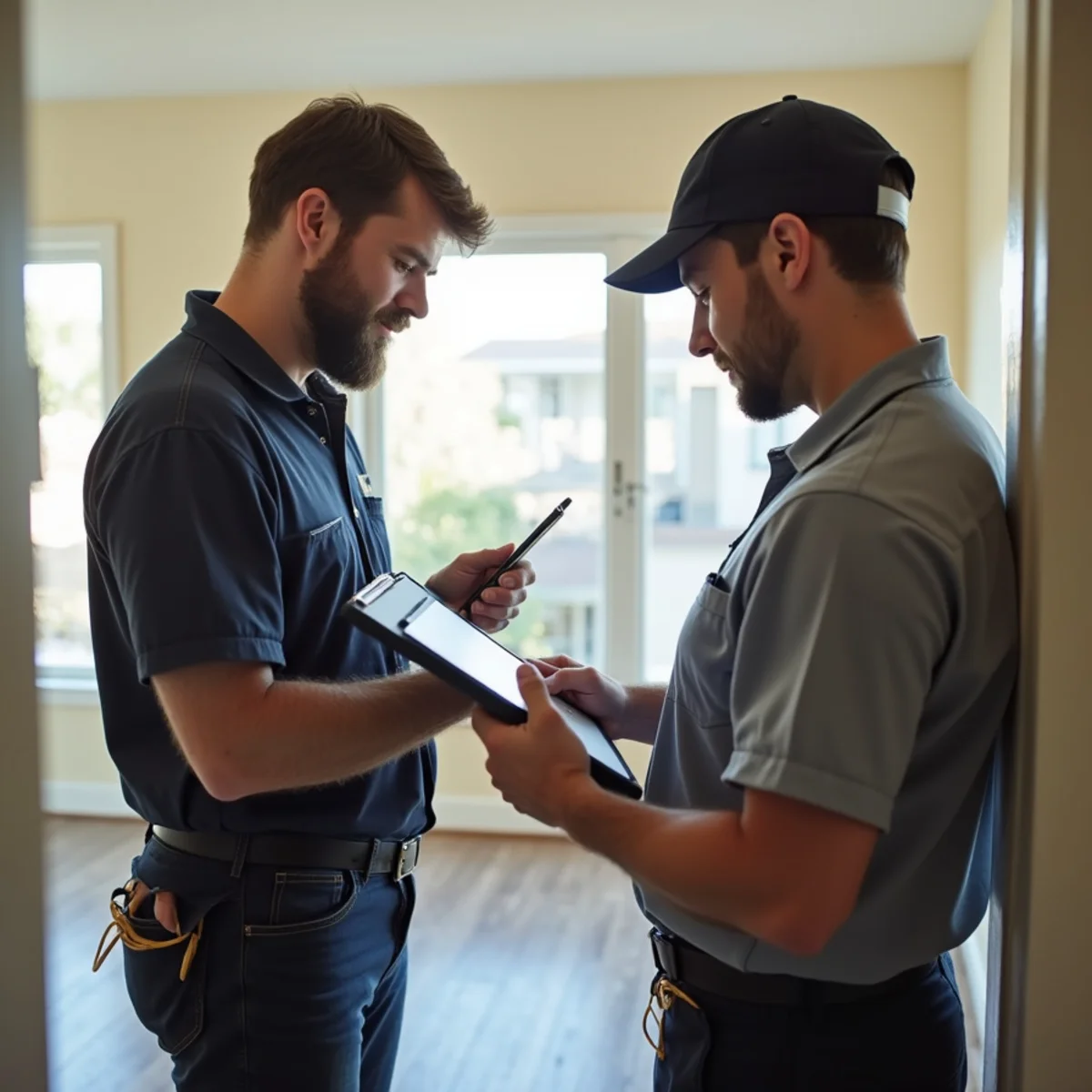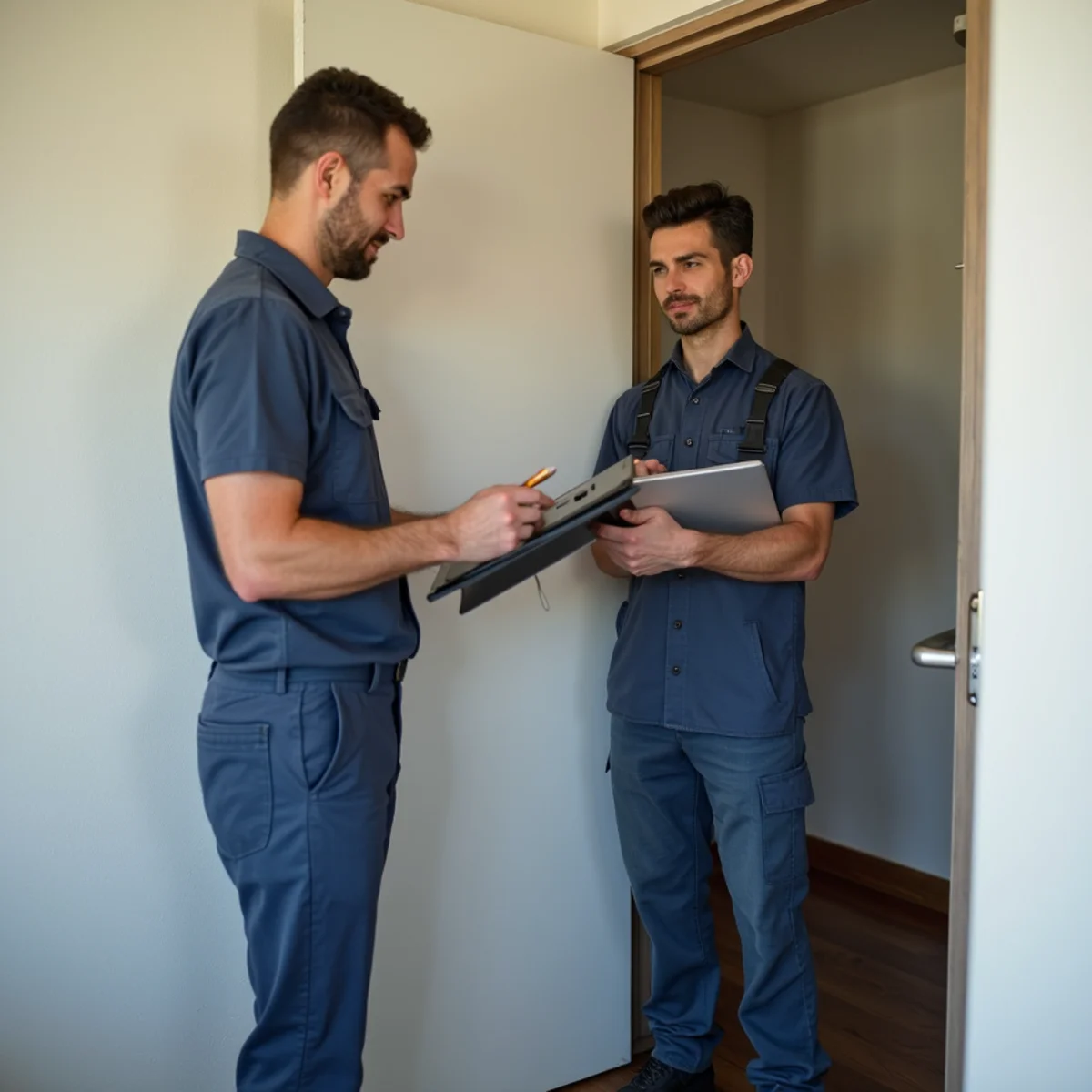
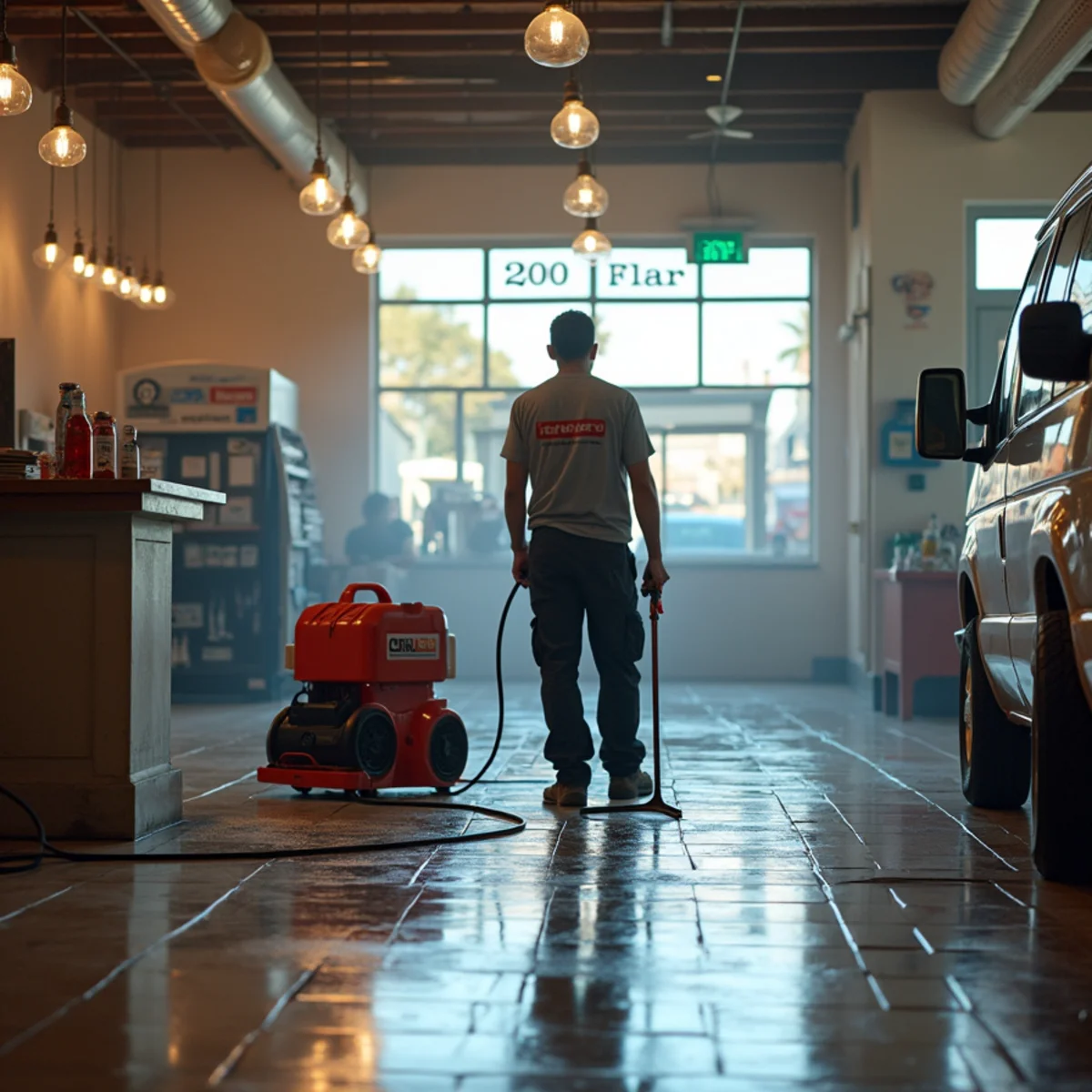
A retail store dealing with water damage is fighting two clocks at once: the one that determines how much of the space and inventory can be saved, and the one that determines how many days the store stays closed. Every hour of delay works against both.
Stores in and around a shopping destination like Weingart Lakewood Center face a specific version of this problem — shared roof and plumbing systems with neighboring tenants, common-area drainage that isn't always under the store's direct control, and customer traffic that makes even a partial closure costly.
This is a practical response plan for a retail tenant dealing with water intrusion, whether it's from a burst pipe, a roof leak, or a flooded common area.
The first 30 minutes
- Get customers and employees safely away from the water and any area near electrical outlets or equipment that could be affected
- Identify the water source if it's obvious (a burst pipe, an overhead leak, a flooded entrance) and shut it off if you have access and it's safe to do so
- If the source is outside your unit's control — a shared roof, a common-area drain, a neighboring tenant's space — notify property management immediately
- Move inventory, fixtures, and equipment away from the water if it's safe and quick to do so; prioritize the highest-value or most water-sensitive items first
- Photograph the damage as it's happening, including water depth or spread, for both insurance and lease-related documentation
Protecting inventory and fixtures
Retail inventory is often more water-sensitive than typical office contents — paper packaging, fabric, electronics, and cardboard displays can all be damaged by water contact or even ambient humidity in a way that's not always immediately obvious.
Raise what you can off the floor onto shelving or pallets, even a few inches can matter in a shallow-water scenario. Separate anything that got wet from anything that stayed dry, since damp inventory can transfer moisture to adjacent stock if left in contact.
Don't assume something is fine because it looks dry on the surface. Cardboard, in particular, can wick moisture upward from a wet floor for hours after the initial contact, damaging product inside a box that looks untouched from the outside.
Getting a restoration crew in fast
For a retail space, the priority after safety and immediate inventory protection is getting professional water extraction and drying started as quickly as possible. Every hour water sits on flooring or wicks into walls, base cabinets, or fixtures adds both to the damage and to the time the store will need to stay closed.
A commercial response should be scoped for the specific pressures of a retail environment: working around remaining inventory and fixtures, coordinating with property management on shared systems, and often working after-hours or overnight to minimize the number of business days lost to closure.
If your unit is part of a shared building — as most spaces in a center like Lakewood Center are — coordinate directly with property management from the start. They'll often have their own contracted response for common-area or building-system failures, and understanding what's covered on their side versus your lease's responsibility affects both the response and later cost questions.
Documentation for insurance and your lease
- Photograph and video the damage extensively before any cleanup begins, including wide shots for context and close-ups of specific damage
- Keep receipts and documentation for any inventory that's damaged or destroyed, including original purchase cost where available
- Review your commercial lease's language on water damage responsibility — many leases split responsibility differently for damage originating in your unit versus damage from a shared building system
- Contact your business insurance carrier promptly; business interruption coverage, if you have it, often has specific notification timelines
- Keep a log of the closure — dates closed, estimated lost revenue, and communication with property management — for both insurance and lease documentation purposes
If you're unsure whether damage falls under your responsibility or the landlord's under your lease, get the restoration process started anyway and sort out cost responsibility afterward. Delaying drying to first resolve a responsibility question almost always makes the damage — and the eventual cost to someone — worse.
Getting back open faster
A phased reopening is often possible even before a space is fully restored. If damage is contained to a specific area — a stockroom, a back corner, a single fixture — the rest of the store may be able to reopen to customers while drying equipment runs in the affected section.
Communicate proactively with customers if a closure or partial closure is needed — a sign, a social media post, or a note on your storefront listing does more for customer retention than silence, and it's a low-cost step that's easy to overlook during a stressful response.
Commercial water damage restoration is generally scoped around minimizing days closed as much as around the damage itself — the two goals usually align, since faster, more thorough drying is what allows for an earlier, safer reopening.
Call for Commercial Water Damage Restoration Near Lakewood Center
Every hour a retail space stays wet is an hour it stays closed. Our commercial water damage restoration team serves Weingart-Lakewood Center and the surrounding area 24/7, typically on-site within about 60 minutes and ready to work around your inventory and reopening timeline. Call Water Damage Lakewood at +1 (201) 277-9344.
Related help from our team
Frequently Asked Questions
Who's responsible for water damage from a shared roof or building system in a retail center?
This depends on your specific lease language, which typically distinguishes between damage originating within your leased space versus damage from shared building systems like a roof or common-area plumbing. Review your lease directly, and involve property management early — most commercial leases have specific notification and responsibility provisions for exactly this scenario.
Should I try to dry things out myself before calling a restoration company?
Basic immediate steps — moving inventory off the floor, using towels or a wet-dry vacuum on standing water, running fans — are reasonable first moves and don't hurt. But structural drying (flooring, walls, subfloor) generally needs professional equipment and moisture monitoring to be done thoroughly; DIY drying often looks sufficient on the surface while leaving moisture trapped underneath.
Does business interruption insurance cover lost sales during a water damage closure?
Business interruption coverage, if included in your commercial policy, can cover lost income during a covered closure, but terms, waiting periods, and covered causes vary significantly by policy. Check your specific coverage or ask your agent directly rather than assuming it applies — and keep detailed closure and revenue-loss documentation regardless, since it strengthens any claim you do file.