A shop vac feels like progress. The standing water disappears from the surface, and the carpet looks dry within an hour. The problem is what's underneath — carpet padding, subfloor, and the bottom of the walls stay wet long after the top looks fine.
That gap between "looks dry" and "is dry" is where mold and warped subfloor start. If a supply line or appliance has flooded a room in Lakewood Manor, here's why professional water extraction does something a wet-dry vac can't.
What a Shop Vac Actually Removes
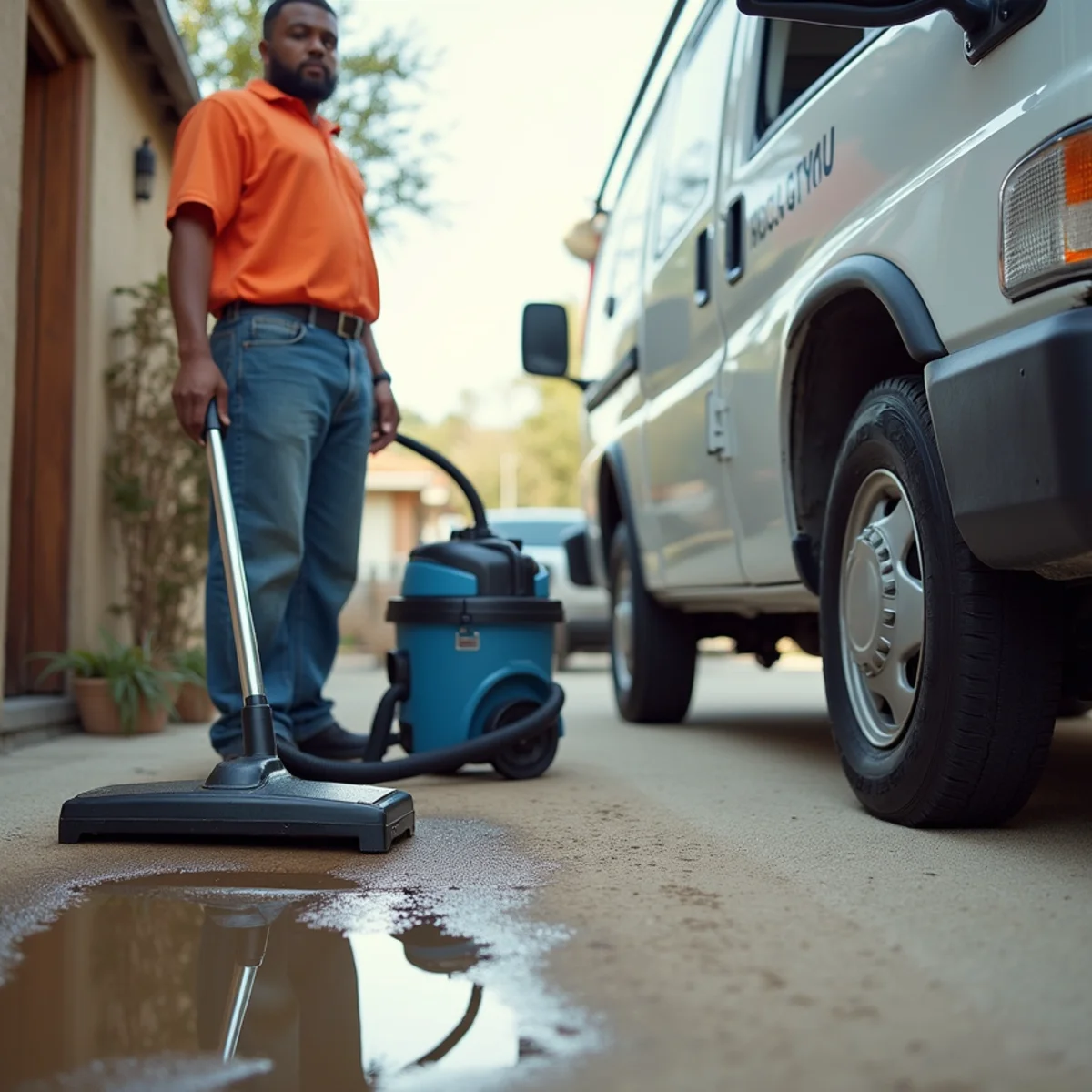
A household or shop vac is built to lift standing water off a hard, flat surface. It has no way to pull water out of carpet fibers, padding, or the wood subfloor beneath — it just isn't strong enough, and it isn't built for saturated porous materials.
Carpet padding works almost like a sponge. It can hold several times its weight in water, and a shop vac passing over the top barely touches what's trapped inside.
Why That Trapped Water Is a Problem
Water left in padding and subfloor doesn't just sit there. It wicks upward into baseboards and the bottom few inches of drywall, and it keeps the room's humidity elevated long after the floor feels dry to the touch.
Mold doesn't wait for you to notice a smell. Under the right conditions it can begin growing within 24 to 48 hours, and trapped moisture under a rug or carpet is exactly the kind of condition it needs.
If a carpet has been wet for more than a day, assume the padding underneath needs to be checked, not just the surface.
What Professional Water Extraction Does Differently
- Truck-mounted or portable extraction units pull far more water, far faster, than any wet-dry vac
- Weighted extraction tools press into carpet and padding to pull out water a surface pass would miss
- Moisture meters check subfloor and wall moisture, not just what's visible
- Padding that's too saturated to save gets removed rather than left to dry and hold moisture long-term
- Air movers and dehumidifiers follow extraction to finish drying what extraction alone can't reach
How to Tell If You Need More Than a Vac
If water sat on the floor for more than an hour or two, or covered more than a small spot, extraction alone from a shop vac probably didn't get it all. Press a hand into the carpet — if it feels spongy or cool, there's still water underneath.
A musty smell showing up a day or two after the surface looked dry is one of the more common signs that padding or subfloor stayed wet.
What Our Water Extraction Process Looks Like
We start with commercial extraction equipment to pull as much water as possible in the first pass, then check moisture levels in the padding, subfloor, and surrounding walls with a meter — not a guess. Padding that's too saturated to dry in place comes out.
From there, air movers and dehumidifiers handle structural drying, and we recheck moisture readings until the numbers confirm the area is actually dry, not just dry-looking.
When to Call
We're on site within about 60 minutes across Lakewood Manor and the surrounding area, 24 hours a day. The first few hours after a flood matter most for keeping a small water problem from becoming a mold problem.
Call +1 (201) 277-9344 for water extraction — we'll tell you honestly whether your carpet and padding can be saved or need to come out.
A shop-vac loses the race the moment it starts
A household shop-vac holds a few gallons and pulls water off hard surfaces at a trickle. A truck-mounted or professional extractor moves water at gallons per minute and keeps going without stopping to empty. On a real flood that difference is the whole job, because water is soaking deeper into the structure every hour the extraction drags on.
The bigger gap is the water you cannot see. A shop-vac skims the surface of a carpet and leaves the pad and subfloor saturated. Weighted extraction tools press the water up out of the pad, and moisture meters confirm the cavity is actually dry. Leave that hidden moisture behind and mold starts colonizing within a day or two, which is why a floor that feels dry to the hand can still be a problem.
- Extractors move gallons per minute; a shop-vac moves a trickle
- Carpet pad and subfloor hold water a shop-vac never reaches
- Weighted tools press moisture up out of the padding
- Meters verify dryness instead of relying on how it feels
- Hidden moisture grows mold in days, not weeks
Related help from our team
Frequently Asked Questions
Can a wet-dry shop vac dry out a flooded carpet?
It can remove standing water on the surface, but it isn't strong enough to pull water out of carpet padding or subfloor. Those layers usually stay wet long after the carpet looks dry, which is where mold risk starts.
How long can carpet padding stay wet before it needs to be replaced?
There's no fixed hour count, but padding that's been saturated for more than 24 to 48 hours is a strong candidate for replacement rather than drying, since it's difficult to fully dry once it's compressed and wet.
How do I know if water reached my subfloor?
A moisture meter is the reliable way to check. Signs like a musty smell, a soft or spongy feel underfoot, or discoloration at the baseboards are worth a professional check even if the carpet surface looks fine.