
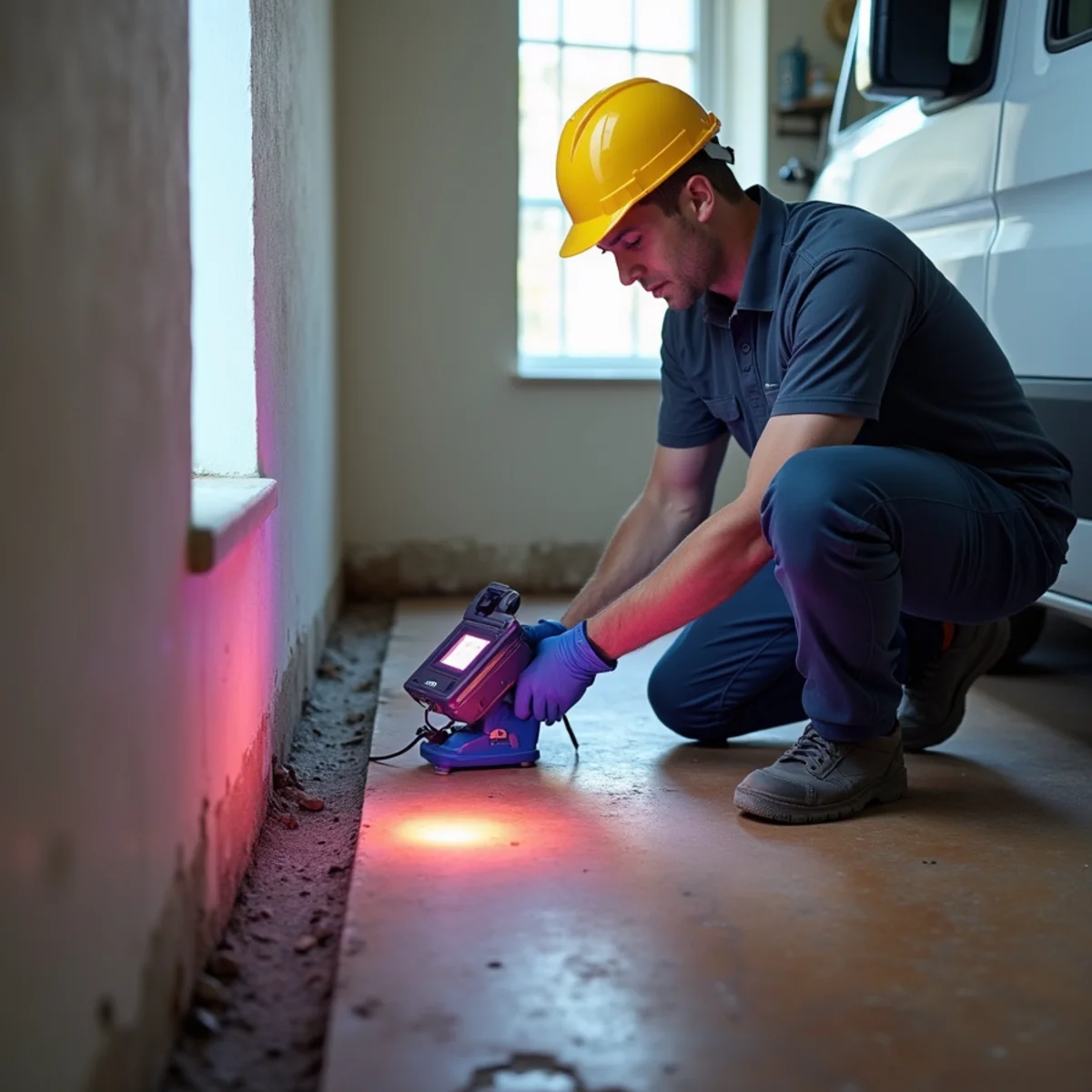
Slab leak is the term for a water leak in the pipes running underneath a concrete foundation. The idea of finding one sounds like it requires jackhammering random sections of floor until you get lucky — but that's not how it's actually done.
In Lakewood Village, where a lot of homes sit on a concrete slab foundation, we locate slab leaks with equipment that reads sound and temperature, not guesswork. Here's how the process actually works.
Why Slab Leaks Are Hard to Spot Early
A slab leak is under several inches of concrete and often under flooring on top of that, so there's no visible pipe to inspect. By the time water reaches the surface, it's usually already caused damage below.
That's why the early signs — a warm floor spot, an unexplained water bill increase, a hissing sound — matter so much. They're often the only clue before real damage shows up.
Acoustic Leak Detection
Pressurized water escaping a pipe under a slab makes a distinct sound, even through concrete. Acoustic detection equipment amplifies that sound so a technician can trace it across the floor and narrow in on where it's loudest, which is typically closest to the leak.
This works especially well on smaller, higher-pressure leaks, where the sound signature is strongest.
Thermal Imaging
A thermal camera reads surface temperature differences across the floor. Since a hot-water line leak heats the surrounding concrete, it often shows up as a warm patch on a thermal scan, even when the floor doesn't feel obviously warm to the touch.
Thermal imaging works well alongside acoustic detection, confirming a location from a second, independent method before anything gets marked for repair.
Other Tools in the Process
- Pressure testing to confirm which line is actually leaking — hot or cold, and which zone
- Video pipe inspection cameras for a direct look inside accessible sections of pipe
- Moisture mapping to track how far water has already spread from the leak point
- Tracer gas testing, used on more difficult leaks where sound and temperature alone aren't conclusive
Pinpointing the leak precisely before any concrete is cut is what keeps a slab leak repair to a small, targeted opening instead of an oversized excavation.
How the Process Comes Together
- Review the warning signs and water usage pattern with the homeowner
- Run acoustic detection to narrow the search area
- Confirm with thermal imaging or pressure testing as needed
- Mark the smallest area necessary for access
- Coordinate the repair, followed by water extraction and drying if water already reached flooring or walls
When to Call
Our leak detection process is built to find the source with the least disruption possible, and it connects directly to our slab leak water damage repair and drying if water has already caused damage. We're on site within about 60 minutes across Lakewood Village.
Call +1 (201) 277-9344 if you suspect a slab leak — the sooner it's located, the smaller the repair usually is.
Why We Locate Before We Open the Slab
Guessing at a slab leak means breaking concrete in the wrong spot. That is a torn-up floor and a leak that is still leaking. So before any jackhammer comes out, we locate the exact point using non-invasive tools and cross-check the readings against each other.
No single method is perfect on Lakewood's 1950s slab-on-grade lines, so we layer them. Acoustic gear listens for the hiss of pressurized water. Thermal imaging finds the warm track of a hot-line leak. Isolation testing tells us whether the leak is on the hot or cold side. Together they narrow a whole-house guess down to a small square of floor.
- Acoustic listening equipment that amplifies the sound of escaping water
- Thermal cameras that read the heat signature of a hot-water leak
- Line pressure and isolation testing to confirm hot side versus cold side
- Tracer gas for quiet leaks that make almost no sound
- Moisture meters to map how far the water has already spread
Related help from our team
Frequently Asked Questions
How do you find a slab leak without breaking up the whole floor?
Acoustic detection equipment picks up the sound of water escaping under pressure, and thermal imaging reads temperature differences on the floor surface. Together they narrow the leak location to a small, specific area before any concrete is opened.
Is slab leak detection accurate?
When acoustic and thermal methods confirm the same location, accuracy is generally high. Pressure testing and, in tougher cases, tracer gas testing add further confirmation before marking a spot for repair.
How much floor gets opened up to fix a slab leak?
With accurate detection first, repairs typically involve a small, targeted opening rather than a large section of floor, since the technician knows precisely where the leak is before any concrete is cut.