After a flood, the instinct is to try to save everything. That instinct is understandable, but it isn't always safe, and holding onto the wrong item can bring contamination and mold risk right back into a home you just cleaned up.
If stormwater got into a home in Carson Park or Briarcrest, here's an honest, category-by-category breakdown of what's usually worth saving and what isn't.
Why Floodwater Is Treated Differently Than a Clean Leak
Floodwater from storm runoff is classified as Category 2 or Category 3 water — gray or black water — because it's picked up contaminants from the ground, storm drains, and sometimes sewage on its way into your home.
That's a different standard than a clean supply-line leak. It means the salvage decision isn't just about whether something is dry, but whether it can be safely disinfected.
What's Usually Salvageable
- Hard, non-porous items: glass, metal, solid wood furniture, and plastic — once thoroughly cleaned and disinfected
- Clothing and washable fabrics — hot-water washing with detergent, in most cases
- Hard flooring like tile or sealed concrete, once cleaned and fully dried
- Documents and photos, if caught early — freezing them can buy time for specialized drying
- Some solid wood furniture, if it didn't stay wet long enough to warp or delaminate
What Usually Has to Go
- Carpet and carpet padding that contacted floodwater
- Mattresses, pillows, and upholstered furniture
- Drywall and insulation below the flood line
- Particleboard or MDF furniture, which swells and delaminates when wet
- Food, cosmetics, and medications that had any contact with floodwater
- Baby items, including car seats, that were submerged
When in doubt about an item's sentimental value, don't decide in the first day. Set it aside to dry and disinfect properly before making a final call.
How to Sort Safely
- Wear gloves and, if the water was visibly contaminated, a mask before handling anything
- Separate items into clean-and-keep, needs-professional-cleaning, and discard piles
- Photograph everything before discarding, for insurance documentation
- Disinfect hard surfaces with an appropriate cleaner, not just soap and water
- Get porous or valuable items assessed by a professional before deciding
What Our Flood Cleanup Process Covers
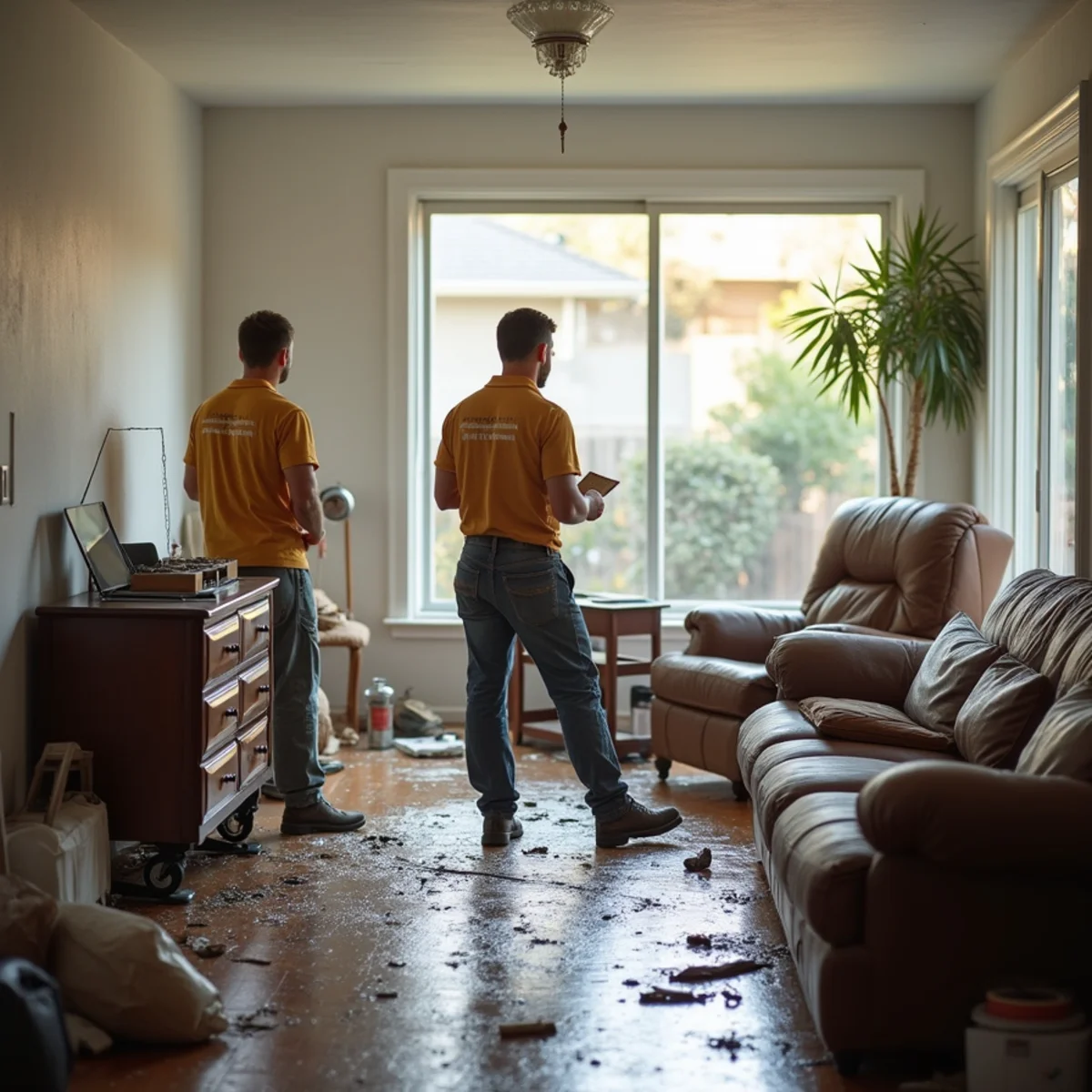
Our flood cleanup crews extract standing water, remove unsalvageable materials, and clean and disinfect what's staying — then bring in structural drying equipment to finish the job. We'll walk through your home with you and give a straight answer on what can realistically be saved.
That documentation also becomes part of your insurance claim, which matters more than people expect when it comes time to settle.
When to Call
Floodwater contamination only gets worse the longer it sits, and mold risk starts within 24 to 48 hours. We're on site within about 60 minutes across Carson Park, Briarcrest, and the surrounding area, 24/7.
Call +1 (201) 277-9344 before you start sorting through flood-damaged belongings on your own.
Porous or Non-Porous Decides Most of It
The fastest way to sort flood-soaked belongings is by what the material does with water. Non-porous items, like glass, metal, and hard plastic, can usually be cleaned and disinfected. Porous items, like mattresses, upholstered furniture, carpet pad, and drywall, soak contamination deep into their structure and rarely come clean, especially after gray or black water.
Then there is a clock on the things you can't replace. Wet documents, photos, and heirlooms have roughly a 48-hour window before mold sets in and ink or emulsion breaks down. If you can't dry them right away, freezing them in a bag stops the damage and buys time for proper drying later.
- Non-porous, hard surfaces: usually cleanable and safe to keep
- Porous soft goods after Cat 2 or Cat 3 water: plan to discard
- Anything touched by sewage: discard porous items regardless of value
- Irreplaceable paper and photos: freeze within 48 hours to stall mold
- When in doubt on contaminated water, health outweighs keeping the item
Related help from our team
Frequently Asked Questions
What should I throw away after a flood?
Porous items that contacted floodwater — carpet, padding, mattresses, upholstered furniture, and drywall below the flood line — usually need to be discarded, since they can't be reliably disinfected once contaminated.
Can furniture be saved after flooding?
Solid wood and hard-surface furniture often can, once cleaned and dried properly. Particleboard or MDF furniture usually can't, because it swells and delaminates when it absorbs water.
Is it safe to keep documents or photos that got wet in a flood?
If they were caught early and the water was relatively clean, yes, often with specialized drying. Freezing wet documents temporarily can stop further damage while you arrange professional drying.
How long do I have to decide what to keep after a flood?
Don't rush the decision on the first day, but don't wait long either. Set questionable items aside to dry and disinfect, and make salvage calls within about 48 hours — after that, mold and lingering contamination make more items unsafe to keep. Photograph everything before you discard it, so your insurance claim has a record.